Geometry Dash Wave Challenge List with Level IDs for Every Skill Level
In Geometry Dash, a "challenge" is officially defined as a highly difficult level lasting 29 seconds or less. The wave game mode, which requires continuous zigzag inputs, is widely regarded as the ultimate test of raw clicking speed and precision.
- Current Hardest: Re by torn49
- Most Famous: VSC by BoBoBoBoBoBoBo
- Best Beginner Practice: Infinite Circles (ID: 11145134)
- Best Intermediate Test: Childlike (ID: 80878937)
Mastering the wave game mode in Geometry Dash requires a unique combination of muscle memory, rhythm, and raw clicks-per-second (CPS). Unlike the cube or the ship, the wave operates on strict diagonal trajectories, meaning there is zero margin for error when navigating tight corridors. For players looking to push their mechanical limits, full-length Extreme Demons are often too exhausting. This is where the Geometry Dash wave challenge list becomes an essential tool for skill progression.
Whether you are trying to build consistency at 3x speed or attempting to clear gaps that are only a few pixels wide, playing dedicated challenge levels is a highly effective training method. This article breaks down the current top-tier official challenges, explains the hardware nuances that affect wave physics, and provides a curated roadmap of level IDs to help you improve.
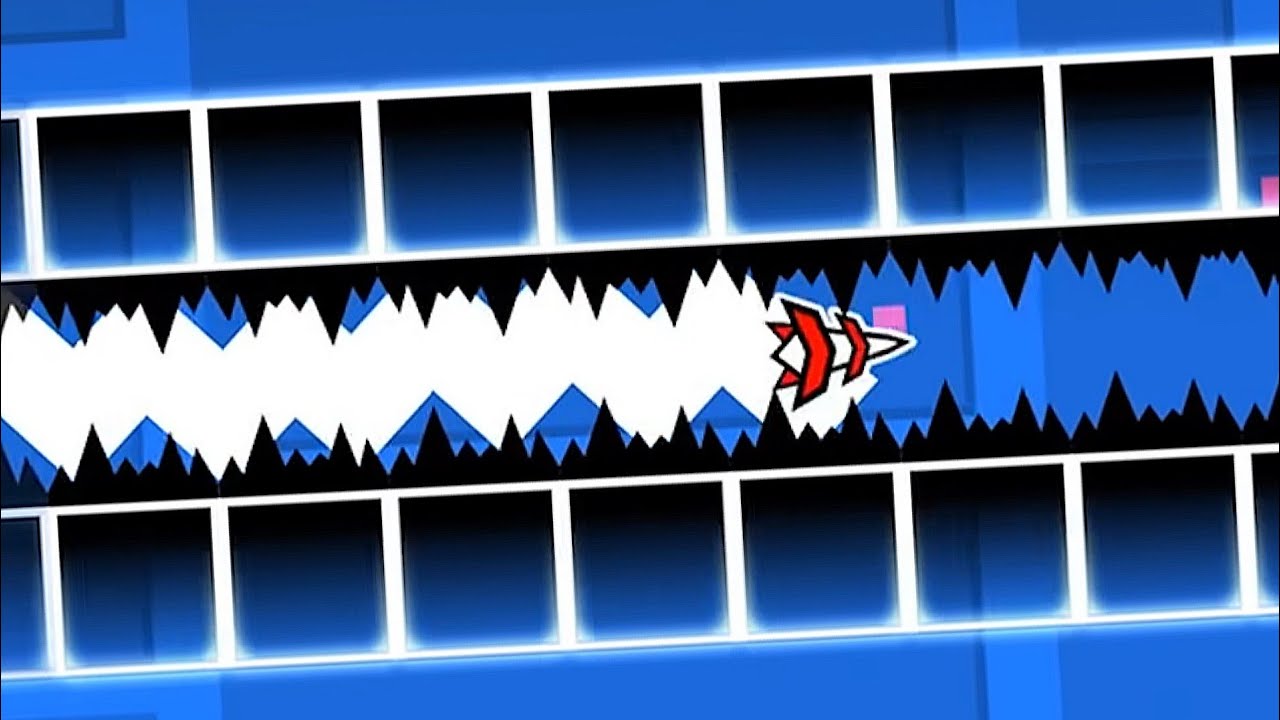
Image source: YouTube
What Qualifies as an Official Wave Challenge
Not every short level qualifies for official ranking. The Geometry Dash community maintains strict definitions to separate standard levels from challenges. According to the official community guidelines, a level must meet specific length criteria to be categorized as a challenge.
- The 29-Second Rule
- To be considered a challenge, a level must have a total completion time of 29 seconds or less. In the game's search filters, these are categorized under the "Tiny" (under 10 seconds) or "Short" (10 to 29 seconds) length tags. Anything 30 seconds or longer is classified as a standard level and belongs on the Demon List rather than the Challenge List.
- The Mechanics of the Wave
- Introduced in Update 1.9, the wave moves in a continuous zigzag pattern. Holding the input makes the icon rise diagonally, while releasing makes it fall diagonally. Challenges exploit this mechanic by forcing players to alternate inputs at incredibly high speeds (spam) or hold inputs for exact millisecond durations to thread the needle through narrow obstacles.
- The Gold Standard for Raw Skill
- Because wave gameplay relies entirely on input timing rather than memorizing complex orb combinations or vehicle transitions, it is widely considered a pure test of mechanical ability. Top players use wave challenges to benchmark their clicking speed and consistency.
When a player completes a top-tier challenge, it serves as a verifiable proof of their mechanical ceiling, which often translates directly to their ability to beat full-length Extreme Demons.
The Hardest Wave Challenges in Geometry Dash Right Now
The upper echelon of the Official Challenge List is a constantly shifting landscape. As players discover new clicking techniques and utilize higher refresh rate monitors, levels that were once deemed "impossible" are eventually verified. As of 2026, the following levels rank among the most formidable wave challenges in existence.
#1: Re by torn49
Currently sitting at the pinnacle of the list, Re is a masterclass in micro-click precision. The level demands frame-perfect inputs through a series of mini-wave corridors that offer virtually zero vertical clearance. What makes Re exceptionally strong as a top challenge is its combination of high-speed transitions and visual obfuscation, requiring players to rely heavily on muscle memory rather than visual reaction.
#2: Illusion of Hell by Exen
Living up to its name, Illusion of Hell features some of the tightest gaps ever verified in the game. Exen designed this level to test a player's ability to maintain a consistent rhythm while navigating asymmetrical slopes. The difficulty is compounded by aggressive background flashes that attempt to break the player's concentration during the most critical inputs.
#3: VSC by BoBoBoBoBoBoBo
While it may no longer hold the #1 spot, VSC remains among the most acclaimed and famous wave challenges in Geometry Dash history. Originally considered physically impossible by many in the community, its verification marked a significant step forward in what players thought was achievable. VSC is heavily focused on rapid, sustained spam at maximum speed, making it a grueling endurance test for a player's clicking arm.
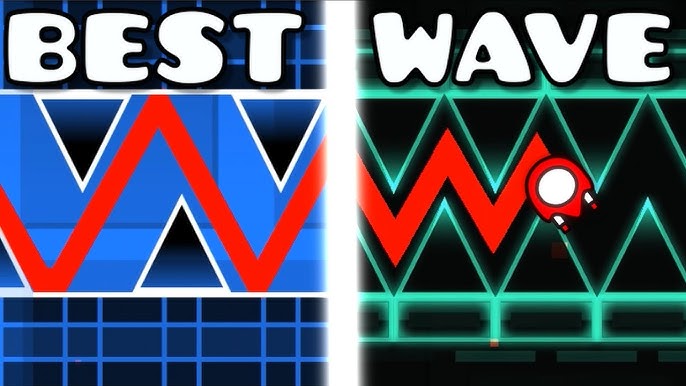
Image source: YouTube
It is important to note that creator Zenmode is a dominant force in this space, appearing numerous times within the Top 50 hardest challenges. His levels frequently set a high standard for modern challenge design, blending extreme difficulty with readable, albeit punishing, gameplay.
How to Choose a Challenge Based on Your Skill Focus
Not all wave challenges test the same skills. If you want to improve efficiently, you should select levels that target your specific mechanical weaknesses. The community generally divides wave challenges into four primary sub-genres.
| Skill Focus | Description | Recommended Level | Level ID |
|---|---|---|---|
| High-Speed Spam | Tests maximum clicks-per-second (CPS). Requires jitter clicking or butterfly clicking techniques. | What the by UFokinWotM8 | Search by Name |
| Mini-Wave Precision | Focuses on the smaller wave icon, which has a sharper angle of ascent and descent, requiring micro-clicks. | Challenge dot com by Woffe | Search by Name |
| Consistency | Longer challenges (20-29 seconds) that test your ability to hold a rhythm without fatiguing. | FINAL FLIGHT | Search by Name |
| Asymmetrical Slopes | Forces the player to navigate non-standard angles, breaking the typical zigzag rhythm. | Gay Lol 4 by Doopliss | Search by Name |
For players struggling with fast clicking, spam challenges are highly recommended. Conversely, if you find yourself dying on slow, tight corridors, focusing on mini-wave precision levels will yield the best results for your overall gameplay.
A Progressive Roadmap to Wave Mastery
Jumping straight into a top 50 challenge is a recipe for frustration. According to community consensus and comprehensive mastery guides, players should follow a structured progression path. It is common for players to spend upwards of 1,000 attempts transitioning between these phases.
Phase 1: The Starter Pack
Before attempting dedicated challenges, you must master the basics. Start with the official main level Blast Processing to understand the wave's gravity mechanics. From there, move to Infinite Circles (ID: 11145134). This level is noted for its 0.7x speed sections and relatively open spaces, making it a highly effective entry point for the "Nine Circles" style of visual gameplay.
Phase 2: The Intermediate Jump
Once you are comfortable at slower speeds, it is time to introduce velocity. Problematic (ID: 7051411) is widely regarded as a top choice for intermediate players. It introduces 3x speed bursts and upside-down wave transitions, forcing you to adapt your muscle memory to inverted gravity.
Phase 3: Advanced Speed Control
The next hurdle is learning to switch rhythms instantly. Fractured Circles (ID: 11211710) focuses heavily on alternating speed portals. You will need to transition from a slow, controlled glide directly into a high-speed spam section without breaking your concentration.
Phase 4: The "Fun" Challenge Entry
Many "easy" challenges are still brutally difficult for newcomers. However, community discussions frequently highlight Childlike (ID: 80878937) as a rare example of a challenge that is actually enjoyable to learn. It serves as an excellent bridge between standard Demon levels and the official Challenge List.
Why Your Hardware Might Be Holding You Back
In Geometry Dash, hardware plays a massive role in a player's mechanical ceiling. The physics of the game—specifically how the wave trail behaves and how inputs are polled—are directly tied to the frame rate. This creates a significant divide known as the "Hz Gap."
Playing on a standard 60Hz monitor or a mobile phone means the game updates 60 times per second. While this is fine for casual play, top-tier wave challenges require inputs that fall between those frames. When playing on a 144Hz, 240Hz, or 360Hz monitor, the input latency decreases dramatically. The wave icon responds to clicks with remarkable speed, and the visual representation of the wave trail becomes exceptionally smooth.
Many challenges in the Top 50 are considered physically impossible on 60Hz devices due to input delay and frame alignment issues. The gaps are simply too tight for a 60Hz polling rate to register the necessary micro-clicks.
If you are playing on a mobile device or a 60Hz setup, do not be discouraged if levels like VSC feel completely unplayable. Focus instead on consistency challenges and slower-speed precision levels, which are much more accommodating to lower refresh rates.
Official Rules for Submitting Challenge Records
If you manage to conquer a level on the official list, you cannot simply claim the victory; you must prove it. The challenge community enforces strict rules to maintain the integrity of the leaderboards.
First, a raw video recording of the 100% completion is mandatory. This video must include audible clicks (to prove the inputs match the on-screen action) and must show the end screen to verify the attempt count and level ID.
More importantly, there is a strict ban on Low Detail Mode (LDM) for wave challenges. While LDM is common in standard levels to reduce lag, it is prohibited here to prevent "hitbox cheating." Creators often use decorative elements to obscure the true hitbox of a spike or a wall. Using LDM to remove these visual obstructions makes the level artificially easier. To prove legitimacy, some creators design asymmetrical waves—where the top and bottom obstacles are slightly offset—making it obvious if a player is using a hack to simplify the visual layout.
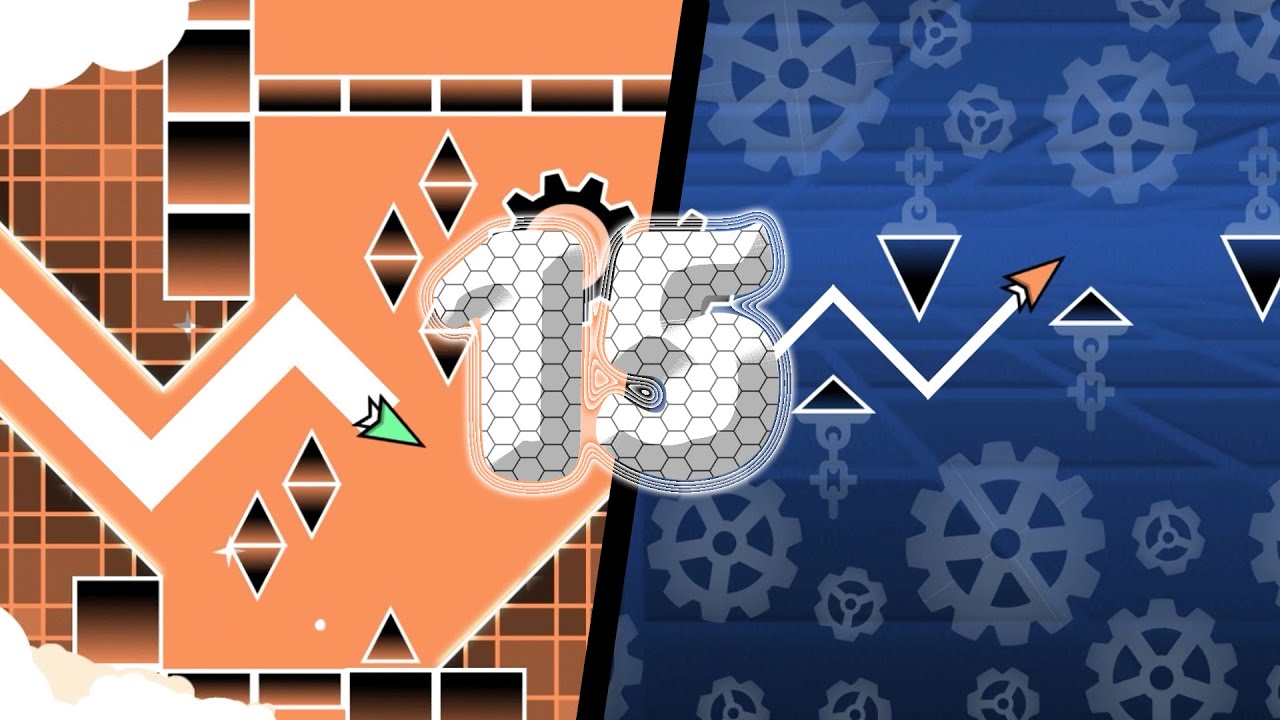
Image source: YouTube
Using "Shitty" Lists and Practice Levels
Because top-tier challenges are often overloaded with flashing lights, moving objects, and high-object-count decorations, they can cause severe frame drops. In wave mode, a single dropped frame usually results in a crash. To combat this, the community utilizes "Shitty" lists.
Despite the crude name, a "Shitty" challenge is simply a stripped-down, layout-only version of an extreme level. These minimalist versions remove all the visual clutter, allowing players to practice the raw movements and build muscle memory without fighting against lag or the infamous "Nine Circles" flashing effect.
If you are struggling to learn a level because you cannot see the obstacles clearly, searching for the level name with "Shitty" or "Layout" attached is a highly effective training strategy. Once the muscle memory is locked in, you can return to the fully decorated version for the official completion.
Master ID Table: Top Wave Challenges and Practice Levels
Below is a comprehensive reference table containing the levels discussed in this article, categorized by their primary skill focus and difficulty tier. Use the Level IDs in the Geometry Dash search tab to find them instantly.
| Level Name | Creator | Level ID | Difficulty Tier | Primary Skill |
|---|---|---|---|---|
| Re | torn49 | Search Name | Extreme Challenge | Micro-Click Precision |
| Illusion of Hell | Exen | Search Name | Extreme Challenge | Tight Gaps / Slopes |
| VSC | BoBoBoBoBoBoBo | Search Name | Extreme Challenge | High-Speed Spam |
| Childlike | Community | 80878937 | Hard Challenge | Entry-Level Precision |
| Fractured Circles | Artimiel | 11211710 | Medium Demon | Speed Transitions |
| Problematic | Dhafin | 7051411 | Easy Demon | Inverted Gravity |
| Infinite Circles | Startor | 11145134 | Easy Demon | Slow Speed Control |
Frequently Asked Questions
As of current official rankings, Re by torn49 is widely considered the hardest wave challenge in the game. It surpasses other legendary levels by requiring frame-perfect micro-clicks through incredibly tight, visually obscured mini-wave corridors at high speeds.
VSC gained legendary status because it was long thought to be physically impossible for a human to complete. When it was finally verified, it represented a massive leap in the community's mechanical skill ceiling. Its brutal high-speed spam requirements make it a benchmark for top-tier players.
To find challenges, go to the search tab in Geometry Dash, click the "+" icon to open advanced filters, and select the "Tiny" or "Short" length modifiers. You can also type specific Level IDs (like 80878937 for Childlike) directly into the search bar.
While entry-level and intermediate challenges are playable on mobile devices, extreme challenges in the Top 50 are exceptionally difficult—and often physically impossible—on a 60Hz phone screen due to input latency and frame alignment limitations.
Improving wave spam requires practicing specific clicking techniques, such as jitter clicking (vibrating your hand to click rapidly) or butterfly clicking (alternating two fingers on the mouse button). Start with slower spam challenges and gradually increase the speed to build endurance.
The original Nine Circles by Zobros, which spawned the entire visual sub-genre of wave-heavy levels, can be found using the Level ID: 4284013. It remains a staple for players looking to master 3x speed wave gameplay.
Final Thoughts on Wave Progression
Mastering the wave in Geometry Dash is a marathon, not a sprint. Progressing from basic levels to the official challenge list requires patience, the right hardware setup, and a strategic approach to practice. By targeting your specific weaknesses—whether that is high-speed spam or mini-wave precision—you can steadily increase your mechanical ceiling.
- Master 1x speed first: Build a solid foundation with levels like Infinite Circles before attempting high-velocity challenges.
- Identify your weakness: Choose practice levels based on whether you struggle with spam, tight gaps, or inverted gravity.
- Utilize layout versions: Search for "Shitty" or layout versions of extreme challenges to learn the muscle memory without visual lag.
- Understand hardware limits: Recognize that 60Hz displays will make top-tier challenges significantly harder due to input delay.
- Record your runs: If you plan to submit to the official list, ensure you have video proof with audible clicks and no LDM enabled.
Start your progression today by loading up Problematic (ID: 7051411) in practice mode and focusing entirely on consistent click rhythms.