How Many Champions Are in League of Legends and Who Should You Play?
Since its launch in 2009, League of Legends has grown from a niche tactical battler into a global phenomenon. Central to this success is the ever-expanding roster of lol of legends champions. As of July 30, 2026, the game features a staggering 173 unique champions, each offering a distinct mechanical identity and narrative background. This growth reflects a journey from the "Original 40" launch characters to the highly complex, multi-layered kits seen in recent years.
Navigating such a massive roster can be daunting for newcomers and returning veterans alike. Whether you are looking for the newest addition to master or seeking a reliable pick to climb the ranked ladder, understanding the current state of the champion pool is essential. According to the Official LoL Champion Gallery, the variety of playstyles now spans six primary roles, ensuring that every player can find a legend that resonates with their personal strategy.
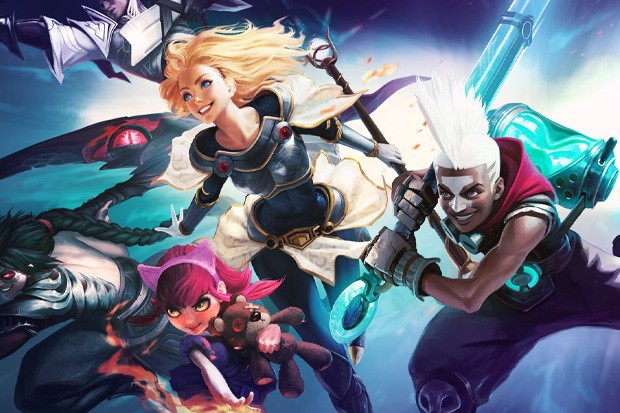
Image source: Radio Times
Who Are the Newest Champions Added to the League of Legends Roster?
The year 2026 has been a significant period for champion design, focusing on high-skill ceilings and narrative depth. The most recent addition to the Rift is Locke, The Ashen Exorcist, released on June 24, 2026. Locke is a high-mobility Jungler/Slayer who utilizes a unique "Spirit Purge" mechanic, allowing him to temporarily phase out of reality to dodge critical abilities. His introduction has shifted the jungle meta, favoring players who can manage complex cooldown windows and precise positioning.
Earlier in the year, we saw the release of Mel, The Soul's Reflection. Transitioning from the lore of the Arcane series, Mel entered the mid-lane as a strategic Mage. Unlike traditional burst mages, Mel focuses on battlefield manipulation and diplomatic "influence" stacks that buff her allies while debuffing enemies. Her kit is widely regarded as one of the most innovative designs in recent years, requiring a deep understanding of macro-play rather than just raw mechanical speed.
Another notable 2026 release is Ambessa, Matriarch of War. As a dominant top-lane bruiser, Ambessa brings the brutal efficiency of Noxus to the Rift. Her gameplay revolves around "Commanding Presence," a passive that increases her damage based on the number of enemies nearby, making her a formidable force in team fights. These new additions demonstrate Riot Games' commitment to evolving the game's complexity, moving away from simple point-and-click mechanics toward more interactive and reactive gameplay loops.
Key Recent Releases (2025-2026)
- Locke (June 2026): A spectral slayer designed for the jungle.
- Mel (March 2026): A tactical mage with high utility and area control.
- Ambessa (November 2025): A heavy-hitting Noxian bruiser for the top lane.
- Aurora (July 2025): A Freljordian skirmisher with portal-based mobility.
Every League of Legends Champion Categorized by Role and Release Year
For players who need a quick reference or a "copy-paste" utility list, the following table provides a snapshot of the roster's diversity. While listing all 173 champions would be exhaustive, we have highlighted key representatives across different eras and roles. This data is compiled from the LoL Fandom Wiki and official patch archives.
| Champion Name | Primary Role | Release Year | Difficulty Tier |
|---|---|---|---|
| Annie | Mage | 2009 | Low |
| Garen | Fighter | 2010 | Low |
| Lee Sin | Fighter/Assassin | 2011 | High |
| Yasuo | Fighter/Assassin | 2013 | High |
| Jhin | Marksman | 2016 | Average |
| Kai'Sa | Marksman | 2018 | Average |
| Aphelios | Marksman | 2019 | Severe |
| K'Sante | Tank/Fighter | 2022 | Hard |
| Hwei | Mage | 2023 | Severe |
| Locke | Slayer/Jungler | 2026 | Severe |
The roles in League of Legends are more than just labels; they define your primary objective during a match. To better understand where you fit, consider these standard definitions:
- Assassins
- High-mobility champions focused on bursting down high-priority targets quickly.
- Fighters (Bruisers)
- Versatile combatants that balance damage output with survivability.
- Mages
- Champions who rely on powerful abilities and area-of-effect spells to control the battlefield.
- Marksmen (ADCs)
- Ranged attackers who provide consistent physical damage, usually scaling heavily into the late game.
- Supports
- Utility-focused champions who protect allies, provide vision, and set up kills.
- Tanks
- Durable front-liners who soak up damage and disrupt the enemy team.
How Champion Design Has Evolved from the Original 40 to Modern Kits
The evolution of lol of legends champions is often discussed through the lens of "complexity creep." In 2009, the original 40 champions featured relatively straightforward kits. For example, Annie or Garen rely on simple, reliable abilities that are easy to understand. A player can pick up Garen and immediately know that his goal is to spin, silence, and execute. This simplicity was necessary for the game's early accessibility.
However, as the player base matured, Riot Games began pushing the boundaries of what a champion could be. This shift is most evident when comparing the "Original 40" to modern releases like Hwei or Locke. Hwei, released in late 2023, features a "palette" system with ten unique abilities, requiring players to memorize complex combinations. Similarly, the 2026 release Locke introduces "Ashen Stance" mechanics that change his ability properties based on the terrain he recently traversed.
"The design philosophy has shifted from 'what does this button do?' to 'how does this button interact with the environment and the enemy's state?' Modern champions are designed to be toolkits rather than just characters." — Community Analysis, 2026
This evolution isn't just about buttons; it's about the narrative. Early champions were often archetypes—the "Ice Archer" (Ashe) or the "Mad Scientist" (Singed). Today, champions are deeply integrated into the world of Runeterra. Their abilities often reflect their lore, such as Ambessa's Noxian leadership or Mel's diplomatic influence. This makes the roster feel like a living part of a larger story, rather than just a collection of game pieces.
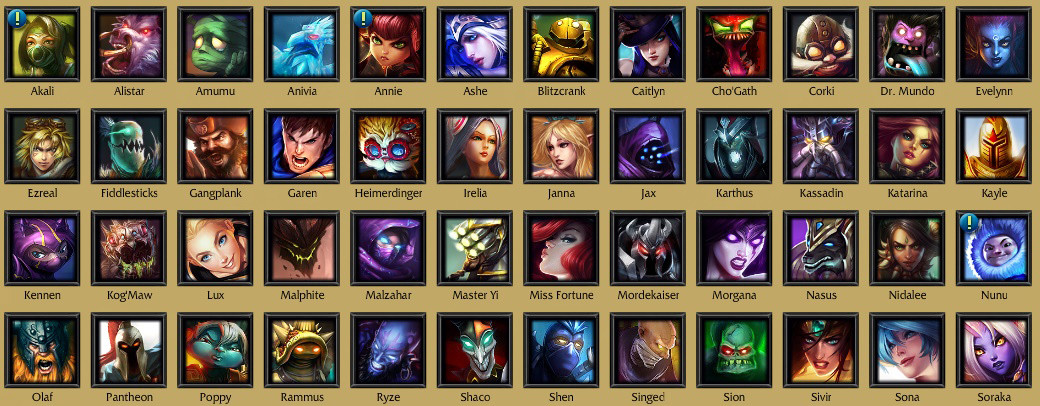
Image source: Turbosmurfs
Which Champions Are Best for Your Specific Playstyle?
Choosing a champion is often the most important decision a player makes. Instead of just looking at win rates, it is often more effective to match a champion to your preferred playstyle in other games. If you enjoy high-octane action, you might prefer a different roster than someone who enjoys slow, methodical strategy. Based on data from Mobalytics, we can categorize champions into "Player Profiles."
The Tactician (Methodical & Strategic)
If you enjoy playing "control" decks in card games or strategy titles like Civilization, you will likely find success with champions who control the map and dictate the flow of battle. These champions often have high utility but require excellent positioning.
- Azir: Commands an army of sand soldiers to control zones.
- Mel: Uses diplomatic influence to buff allies and manipulate enemy movement.
- Anivia: Creates walls and blizzards to trap enemies.
The Brawler (Aggressive & Durable)
For those who want to be in the thick of the fight, soaking up damage while dealing it back, the "Juggernaut" or "Bruiser" sub-classes are ideal. These champions are often the top choice for players who enjoy traditional RPG tanks or action-heavy combat.
- Darius: A terrifying lane bully who excels in extended trades.
- Ambessa: A Noxian powerhouse that thrives when outnumbered.
- Sett: A literal pit-fighter who uses the enemy's damage against them.
The Specialist (High Skill & High Reward)
If you pride yourself on your mechanical "outplay" potential—similar to playing a high-mobility character in Overwatch or a fighting game—these champions offer the highest ceiling for skill expression. They are often difficult to learn but exceptionally strong in the right hands.
- Locke: Requires precise timing of his spectral shifts to survive.
- Lee Sin: The gold standard for jungle playmaking and mobility.
- Irelia: A blade-dancer who can dash through entire teams if played correctly.
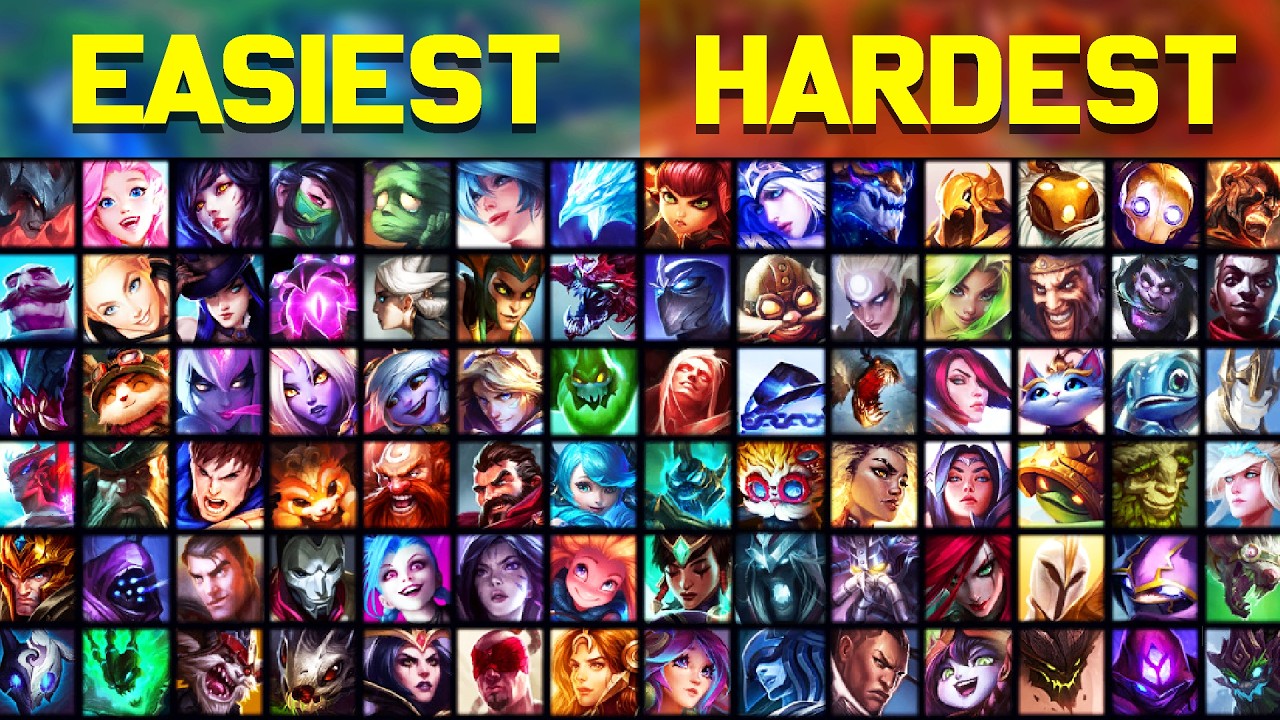
Image source: YouTube
Why Some Champions Dominate Pro Play but Struggle in Solo Queue
A common frustration for players is seeing a champion like K'Sante or Azir have a 100% pick/ban rate in professional tournaments like MSI 2026, while maintaining a sub-48% win rate in standard ranked games. This "Pro-Play Trap" occurs because certain champions are designed to thrive in highly coordinated environments. According to OP.GG, champions with high utility and "flex" potential are often prioritized by pros because they can be played in multiple roles to disrupt the enemy's draft.
For example, in the 2026 G2 vs T1 matches, we saw Mel used as both a Mid-laner and a Support. This flexibility is invaluable in a professional setting where teams can build specific strategies around her "Influence" mechanic. However, in Solo Queue, where communication is limited, Mel's power is significantly diminished because her teammates may not know how to capitalize on the windows of opportunity she creates.
Experts often suggest that for the average player looking to climb the ranks, "One-Tricking" (mastering a single, simpler champion) is a more effective strategy than chasing the pro meta. Champions like Amumu or Miss Fortune consistently rank among the top choices for climbing because their kits are reliable and their impact is easy for teammates to follow without voice communication.
How to Unlock and Manage Your Champion Collection
With 173 champions available, unlocking the full roster can seem like a monumental task. Fortunately, Riot Games has introduced several systems to make the process more accessible for new players. As of 2026, there are three primary ways to expand your collection:
- Blue Essence (BE): This is the primary free-to-play currency. You earn BE by leveling up your account and disenchanting "Champion Shards" found in Level-Up Capsules.
- Hextech Crafting: By performing well in games, you earn Hextech Chests. These can contain shards that allow you to unlock champions at a significant discount compared to the store price.
- Xbox Game Pass: A notable partnership allows players with an active Game Pass subscription to instantly unlock all 173 champions. This is widely considered one of the most efficient ways to access the full roster immediately.
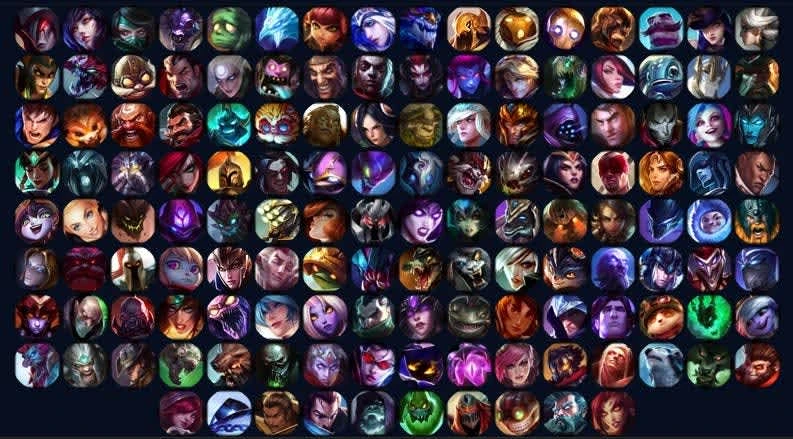
Image source: eloboost24.eu
Managing your collection also involves staying updated with the Free-to-Play Rotation. Every week, Riot makes 20 champions available for free in unranked games. This is an excellent opportunity to test high-difficulty champions like Locke or Aphelios before committing your hard-earned Blue Essence to them.
Frequently Asked Questions
Who is the newest champion in League of Legends as of 2026?
The newest champion is Locke, The Ashen Exorcist, who was released on June 24, 2026. He is a high-skill ceiling Jungler known for his spectral mobility and ability to phase through enemy attacks. Locke's release followed other 2026 additions like Mel, The Soul's Reflection.
How many champions are in LoL in 2026?
As of July 30, 2026, there are 173 champions in the League of Legends roster. The game began with 40 champions at launch in 2009 and has consistently added 4-5 new legends per year, alongside comprehensive reworks of older characters to keep them competitive.
Which champion is considered the hardest to play?
While difficulty is subjective, champions like Hwei, Aphelios, and the new 2026 release Locke are widely regarded as the most difficult. These "Severe" tier champions require players to manage multiple ability forms, complex resource systems, or precise environmental interactions that go beyond standard gameplay.
Who was the first champion ever made?
Technically, the first group of champions introduced during the Alpha phase in 2009 included 17 characters, such as Annie, Ashe, and Ryze. However, Singed is often cited by developers as one of the earliest designs that helped define the game's unique mechanical identity.
Can you play all champions for free?
Yes, you can eventually unlock all champions for free using Blue Essence earned through gameplay. Additionally, Riot offers a weekly rotation of 20 free champions. For those who want immediate access, an Xbox Game Pass subscription unlocks the entire roster as long as the subscription is active.
Final Thoughts
The roster of League of Legends champions has evolved into a massive, diverse ecosystem that offers something for every type of player. Whether you prefer the classic simplicity of the original roster or the high-octane complexity of 2026's newest legends, the game continues to set a high standard for character design.
- Total Roster: 173 champions as of July 2026.
- Latest Addition: Locke, The Ashen Exorcist (June 2026).
- Beginner Friendly: Garen, Annie, and Ashe remain top choices for learning the game.
- Pro Favorites: Mel and K'Sante dominate professional drafts due to their high utility.
- Acquisition: Use Blue Essence or Game Pass to expand your collection efficiently.
- Complexity: Modern kits like Hwei and Locke offer the highest skill expression in the game's history.
To start your journey, try out the current free-to-play rotation and find the champion that matches your personal combat style.