Is the Prototype in Poppy Playtime Chapter 4 and What Is His Role
Yes, the Prototype (Experiment 1006) is the central antagonist of Poppy Playtime Chapter 4. However, he spends the majority of the chapter operating in the shadows, deceiving the player by mimicking the voice of "Ollie." The chapter concludes with a massive physical reveal of his new six-legged form and a devastating trap that drops the player directly into his underground laboratory, setting the stage for the franchise's climax.
Since the very first installment of the franchise, Experiment 1006 has loomed over the Playtime Co. factory as an unseen architect of destruction. Players have found his shrines, read his dossiers, and witnessed the aftermath of his violence. But the question driving the community heading into the latest installment was simple: does he finally step out of the shadows?
The answer is a resounding yes, though not in the way many anticipated. Chapter 4 shifts the narrative focus entirely onto the Prototype, revealing the depths of his psychological manipulation and showcasing a terrifying physical evolution. This deep dive explores exactly how the Prototype appears in Chapter 4, the mechanics behind his deception, the lore implications of his dialogue, and what the explosive ending means for the future of the series.
How the Prototype Appears in Chapter 4
Unlike previous chapters where the primary threat was a distinct, localized monster—such as Huggy Wuggy, Mommy Long Legs, or CatNap—Chapter 4 presents a pervasive, psychological threat. The Prototype does not immediately chase you down dark corridors. Instead, he guides you.
According to the official Poppy Playtime Wiki documentation, the Prototype's primary method of interaction throughout the early and middle stages of Chapter 4 is through the character of "Ollie." Players who survived Chapter 3 will remember Ollie as the helpful child communicating via a toy phone, providing crucial guidance and security codes. In Chapter 4, that trust is weaponized.
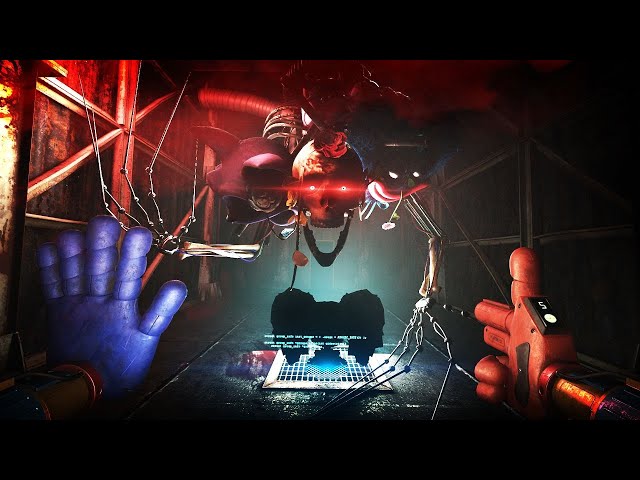
Image source: YouTube
The Shocking Revelation That Ollie Is Experiment 1006
The narrative twist that recontextualizes the entire game occurs during a tense sequence where the player relies on Ollie's directions to navigate a hazardous sector. The facade drops abruptly. The voice of the innocent child distorts, pitching down into a metallic, multi-layered resonance. The entity on the other end of the line reveals itself not as a survivor, but as Experiment 1006.
This revelation confirms a long-standing community theory. As discussed in extensive Reddit lore analyses, the Prototype used the Ollie persona to deliberately steer the player and Poppy away from genuine escape routes and directly into his meticulously prepared traps. The psychological impact of this betrayal is significant; the one voice of comfort in the factory was actually the architect of the "Hour of Joy."
Why the Prototype Mimics Voices to Manipulate You
The mechanics of the Prototype's voice mimicry are deeply tied to the factory's dark history. Lore documents and environmental storytelling indicate a grim rule: the Prototype specifically targets and utilizes the voices of those who have died within the facility. He operates as a living tape recorder, capturing the final moments of his victims or the staff he observed before the uprising.
To understand the deception, we must separate the human from the monster:
- The Real Oliver: Archival evidence suggests a human child named Oliver did exist, likely an orphan brought to the Playtime Co. Playcare facility.
- The Tragedy: Oliver is presumed to have perished during or prior to the Hour of Joy, allowing his voice to be "recorded" by Experiment 1006.
- The Mimicry: The entity speaking to the player in Chapters 3 and 4 is entirely the Prototype, using Oliver's voice to exploit the player's instinct to protect a child.
By mimicking a child, the Prototype bypassed the natural defenses of both the player and Poppy. Poppy, driven by a desire to save the innocent, was easily manipulated by the sound of a frightened boy. This strategic isolation allowed the Prototype to maneuver the protagonists exactly where he needed them for the chapter's climax.
What Does the Prototype Look Like in Chapter 4?
For years, the visual representation of the Prototype was limited to a skeletal, metallic claw seen dragging away defeated toys. In Chapter 3, players witnessed a massive shrine built in his honor, hinting at his scale. Chapter 4 finally provides a comprehensive look at his physical form, and it is a significant departure from early fan concepts.
The Prototype is a biomechanical nightmare, a constantly evolving amalgamation of machinery, bone, and the harvested parts of other experiments. He is not a static creation; he is a scavenger.
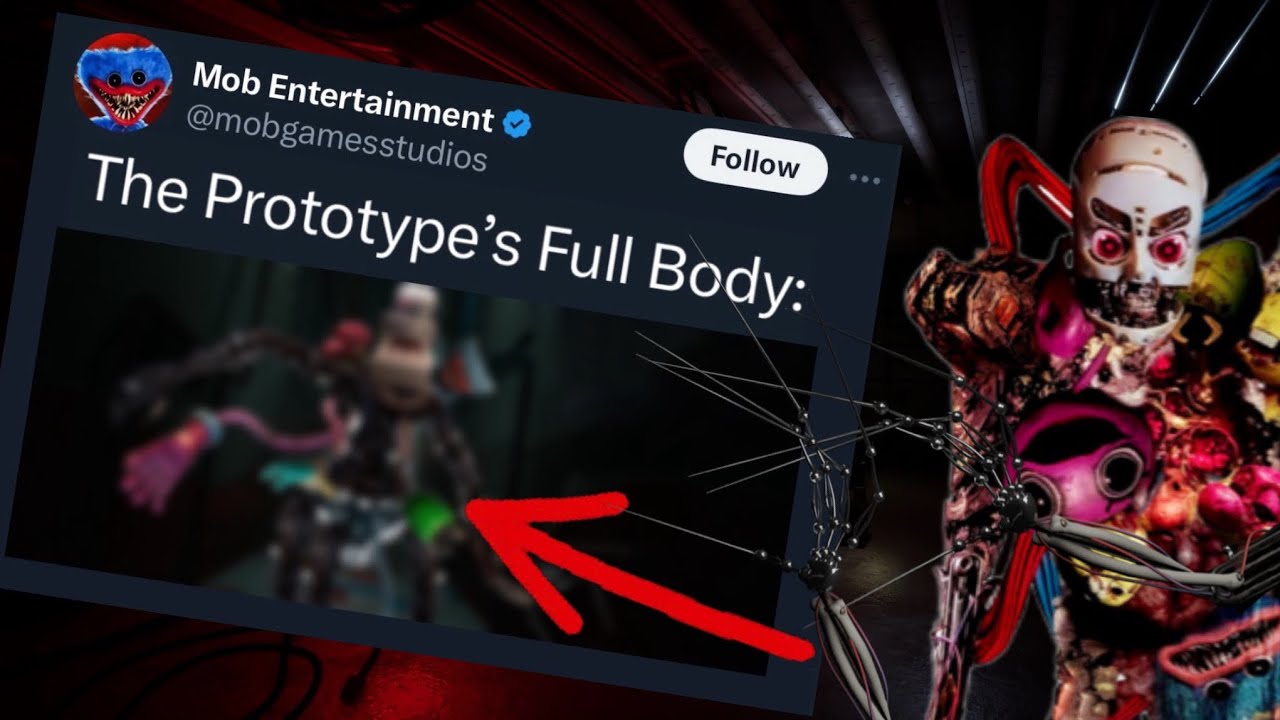
Image source: YouTube
Analyzing the New Six-Legged Design and Physical Stats
The most notable physical change in Chapter 4 is his locomotion. Previously depicted or theorized as having four limbs, the Prototype now navigates the factory depths on six massive, articulated legs. This arachnid-like structure provides him with immense stability and speed, allowing him to traverse the vertical shafts and ruined infrastructure of the lower levels.
- Height
- Approximately 731 cm (24 feet) when fully extended, making him one of the tallest entities in the facility.
- Weight
- Estimated at 9.3 metric tons, a mass accumulated through decades of absorbing industrial machinery and organic material.
- Structure
- A central metallic spine serving as a nervous system, surrounded by a ribcage of reinforced steel and grafted toy components.
According to anatomical breakdowns on the Villains Wiki, this six-legged design is a direct result of his continuous self-modification. He is the ultimate expression of the "Bigger Bodies" initiative, not because he was built perfectly, but because he refuses to stop building himself.
How the Prototype Incorporates Parts From Other Toys
The Prototype's physical growth is directly tied to the demise of other major antagonists. At the end of Chapter 3, players watched him claim the remains of CatNap. In Chapter 4, this grim harvesting continues.
Throughout the chapter, players encounter secondary threats like Doey the Doughman and Yarnaby. When these entities are defeated or outlive their usefulness, the Prototype arrives to claim them. He does not eat them for sustenance; he integrates their structural components into his own frame. A reinforced joint from one toy becomes a new knee; a sensory organ from another becomes an additional eye. This modular anatomy makes him highly adaptable and visually chaotic, a literal walking graveyard of the factory's failures.
Explaining the Chapter 4 Ending and the Prototype's Plan
The climax of Chapter 4 is among the most intense sequences in the franchise to date. Once the Ollie deception is fully revealed, the Prototype springs a trap that fundamentally alters the geography of the game and the stakes for the characters involved.
The sequence begins with a massive detonation. The Prototype, having lured the player and their allies to a specific structural weak point, triggers an explosion beneath the floorboards. This is not an attempt to kill the player outright—if he wanted the player dead, he had ample opportunities. Instead, it is a calculated demolition designed to force a descent.
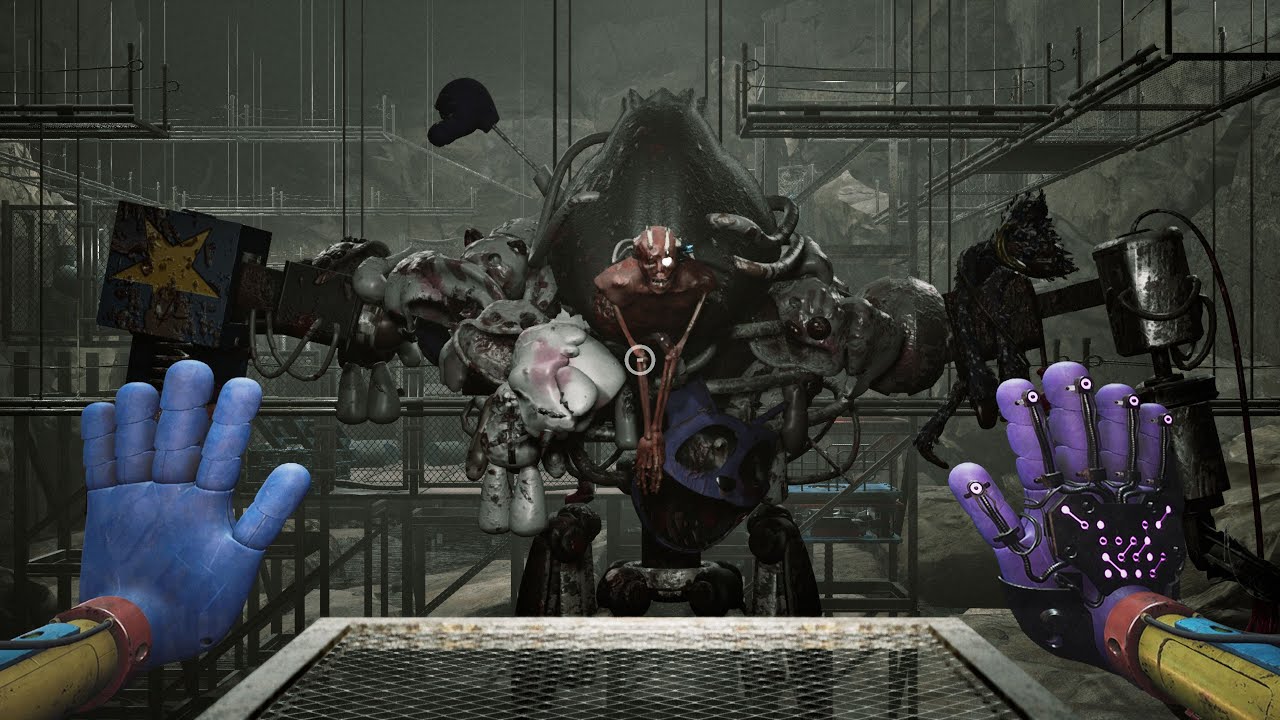
Image source: YouTube
What Happened to Kissy Missy and the Player in the Lab?
As the floor gives way, the player plummets into the darkness. Kissy Missy, who has served as a crucial ally, attempts to intervene. In a tragic and violent moment, she reaches out to save the player, only to be caught in the collapsing machinery and the Prototype's grasp. Her arm is violently torn off in the struggle.
The player survives the fall, landing in a pristine, hidden sector of the facility: the Original Underground Laboratory. This environment stands in stark contrast to the ruined, blood-stained corridors above. It is sterile, organized, and deeply unsettling. The visual clues in this lab suggest it is the birthplace of the Bigger Bodies initiative—and the Prototype's true home.
Kissy Missy's fate remains ambiguous. While she is severely injured, her death is not explicitly confirmed on screen, leaving her status as a major cliffhanger for Chapter 5. However, the player is now trapped exactly where the Prototype wants them.
Why Huggy Wuggy Returned at the End of the Chapter
Just as the player regains their bearings in the underground lab, the chapter delivers one final shock. Through a reinforced porthole door, a familiar silhouette appears: Huggy Wuggy.
The return of the Chapter 1 antagonist has sparked intense debate. Is this the original Huggy Wuggy who survived the fall in the factory lobby, or is it a new iteration? Gaming analysts note that the lore presents conflicting data regarding Huggy's alignment. Some sources classify him as a former major subordinate who may now be an enemy of the Prototype, while others suggest he has been repaired and reprogrammed to serve as the lab's final guard dog. Regardless of his allegiance, his presence indicates that the deepest levels of the factory hold the franchise's oldest secrets.
Deep Lore and Theories Connecting the Prototype to Elliot Ludwig
Beyond the physical horror, Chapter 4 delivers massive narrative revelations through its dialogue. The interactions between the Prototype and Poppy provide the strongest evidence yet for the game's most popular theory: the true identity of Experiment 1006.
During a pivotal confrontation, the Prototype speaks directly to Poppy. He does not use the distorted, monstrous roar expected of a beast. Instead, he speaks with a calm, authoritative, and deeply patronizing tone. He tells her to "come home" and expresses that he is "very disappointed" in her actions.
"You were meant for so much more than this. Come home. I am very disappointed in what you have chosen to become."
Is Elliot Ludwig Actually the Consciousness Inside the Prototype?
This "disappointed father" dynamic heavily supports the theory that Elliot Ludwig, the founder of Playtime Co., is the human consciousness trapped inside—or willingly driving—Experiment 1006. Ludwig was known to be obsessed with resurrection and eternal life following a personal tragedy in his family.
Based on current lore drops, how likely is it that Ludwig is the Prototype?
Evidence: The timeline of Ludwig's disappearance aligns perfectly with the creation window of Experiment 1006 (1976-1989). Furthermore, the religious devotion shown by toys like CatNap (calling him the "Angel of Salvation") makes sense if they view him as their literal creator.
If Ludwig is the Prototype, his motivation shifts from mindless violence to a twisted form of salvation. He may view the destruction of the factory and the assimilation of the toys as the only way to "save" them from the torment of their existence, bringing them all together into one perfect, unified body.
Why the Prototype Calls Poppy the Original
Another crucial detail from Chapter 4 is the Prototype referring to Poppy as "The Original." This title carries immense biological and narrative weight. Poppy was the first successful experiment in transferring human consciousness into a toy. The Prototype, designated 1006, was the first successful "Bigger Body" experiment.
This creates a dark parallel. They are the only two truly sentient, highly intelligent beings in the factory who fully understand what they are. The Prototype's insistence that Poppy belongs with him in the depths suggests he views them as intellectual equals—or perhaps, as family. If Ludwig is the Prototype, and Poppy contains the consciousness of Ludwig's lost family member, their conflict is not just a monster hunt; it is a tragic family dispute playing out on a horrific scale.
Comparing the Prototype Across All Four Chapters
To understand the magnitude of the Prototype's role in Chapter 4, it is helpful to track his evolution from a background element to the active puppetmaster of the series.
| Chapter | Physical Appearance | Primary Method of Interaction | Key Victims / Parts Added |
|---|---|---|---|
| Chapter 1: A Tight Squeeze | Skeletal Claw (Brief glimpse) | Environmental storytelling, VHS tapes | None directly observed |
| Chapter 2: Fly in a Web | Skeletal Claw | Dragging away remains at the conclusion | Mommy Long Legs (Torso/Limbs) |
| Chapter 3: Deep Sleep | Worshipped via a massive Shrine | Voice mimicry (Ollie introduction), Cult leadership | CatNap (Skeletal structure) |
| Chapter 4 | Massive 6-Legged Biomechanical Entity | Direct dialogue, Psychological manipulation, Traps | Doey the Doughman, Yarnaby, Kissy Missy (Arm) |
This progression highlights a deliberate narrative strategy by the developers. The Prototype transitioned from a passive scavenger to an active architect of the player's suffering. He is no longer waiting at the bottom of the factory; he is actively pulling the player down to meet him.
Final Thoughts on Experiment 1006
Chapter 4 fundamentally changes the landscape of Poppy Playtime. The Prototype is no longer just a shadow on a VHS tape; he is a fully realized, highly intelligent antagonist who has outsmarted the player at every turn. By stripping away the safety of the "Ollie" persona and forcing the player into his domain, the stage is set for a brutal final confrontation.
- Ollie was a deception: The helpful voice on the phone was Experiment 1006 mimicking a deceased child to manipulate the player.
- Physical reconstruction: The Prototype has evolved into a massive, 24-foot, six-legged entity built from the remains of fallen toys.
- The trap was sprung: The chapter ends with a calculated explosion, dropping the player directly into the Original Underground Laboratory.
- Kissy Missy is compromised: The beloved ally lost an arm and her ultimate survival remains a major cliffhanger.
- Huggy Wuggy returns: The Chapter 1 antagonist appears in the final frames, though his allegiance in the underground lab is unknown.
- The Ludwig connection strengthens: Dialogue strongly implies that Playtime Co. founder Elliot Ludwig is the consciousness driving the Prototype.