The History and Legacy of Powerlanguage.co.uk: From Josh Wardle’s Portfolio to the Wordle Phenomenon
Powerlanguage.co.uk is the personal portfolio of software engineer Josh Wardle and the original home of the viral word game Wordle. While the game moved to the New York Times in early 2022, the domain remains a significant piece of internet history, currently hosting Wardle's other creative experiments like Acptle. The site is celebrated for its minimalist, ad-free design and its "anti-app" philosophy.
What Is Powerlanguage.co.uk and Who Is Josh Wardle?
In the landscape of the modern internet, few domains carry as much cultural weight as powerlanguage.co.uk. Originally serving as a simple portfolio for Josh Wardle, a Brooklyn-based software engineer and artist, the site became a global destination in late 2021. Wardle, who previously lived in Oakland, California, has long used the "powerlanguage" handle for his digital projects, ranging from artistic installations to complex social experiments.
Josh Wardle is not a typical game developer. With a background that includes a tenure at Reddit and the viral art collective MSCHF, his work often focuses on how humans interact in digital spaces. Powerlanguage.co.uk was never intended to be a commercial hub; it was a playground for ideas. When Wordle was first launched on the site, it had no ads, no tracking pixels, and no requirement to create an account. This purity of design is widely considered one of the primary reasons the game resonated so deeply with a public fatigued by the "attention economy."
As of 2026, the domain no longer hosts the daily Wordle puzzle—that has moved to the New York Times ecosystem—but it remains the primary portal for Wardle's ongoing creative output. For many, visiting the site is a nostalgic trip to the birthplace of a digital ritual that brought millions of people together during a period of global isolation.
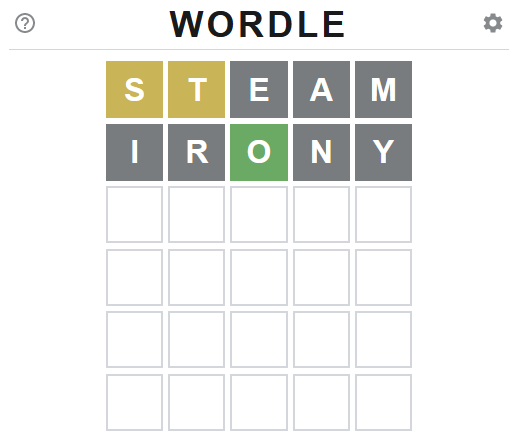
Image source: Puzzle a Day - WordPress.com
The Technical Magic Behind the Original Wordle Site
One of the most fascinating aspects of the original powerlanguage site was its technical simplicity. In an era where even basic web applications are bloated with megabytes of frameworks and tracking scripts, Wordle was a "static miracle." It demonstrated that a global phenomenon could be built using nothing more than fundamental web technologies.
Why the Static Javascript Architecture Made Wordle a Viral Success
The original Wordle was built as a single-page application using static HTML, CSS, and a single Javascript file. There was no database and no backend server processing your guesses. When you loaded the page, the entire game logic and the full list of words were downloaded to your browser. This architecture meant that the game loaded almost instantly, even on poor internet connections.
Because there was no backend, the game relied on localStorage—a feature of modern browsers that allows websites to store small amounts of data on your device. This is how the site remembered your streak and your previous guesses without ever needing you to "Log In." This privacy-first approach was a top choice for users who were wary of sharing personal data with yet another platform.
How the Hardcoded Word List and the 2028 Expiration Work
Technical deep-dives into the source code on Hacker News revealed that the original game contained a hardcoded list of approximately 2,300 five-letter words. These were the "solution" words, carefully curated by Wardle and his partner to exclude obscure or offensive terms. There was also a secondary list of about 10,000 words that the game would accept as valid guesses but would never use as an answer.
The game determined the "Word of the Day" using a simple mathematical function (a modulo) based on the number of days since the game's launch. While the original list was indexed to run through 2028, the code was written such that it could technically loop back to the beginning and run indefinitely. This static nature meant that users could actually save the entire website to their local computer and play the original version of Wordle forever, even without an internet connection.
Beyond Wordle: The Powerlanguage Portfolio of Social Experiments
While Wordle is undoubtedly Wardle's most famous creation, his portfolio on powerlanguage.co.uk and his previous work at Reddit reveal a consistent fascination with time-limited social interactions. He specializes in creating "digital moments" that require collective participation.
Reddit’s The Button and Place — The DNA of Viral Interaction
Before Wordle, Josh Wardle was the mastermind behind two of Reddit's most famous social experiments. The Button (2015) featured a 60-second countdown timer that reset every time someone pressed it. Users were given a single press for the lifetime of their account, leading to the formation of "cults" based on how low the timer was when a user pressed it. This experiment lasted for months and showcased Wardle's ability to create high-stakes engagement from a simple mechanic.
In 2017, he created Place, a massive collaborative canvas where each user could place a single colored pixel every few minutes. This resulted in a digital war of art, flags, and memes, eventually becoming a recurring event on the platform. Both projects share the "once-a-day" or "limited-action" DNA that made Wordle a daily ritual rather than a bingeable distraction.
What Is Acptle and How Do You Play It Today?
Currently, the powerlanguage.co.uk domain hosts a game called Acptle. This project serves as a competitive variant for those who find the standard Wordle format too simple. In Acptle, players must complete six rounds of Wordle-style puzzles in a single session. The goal is to achieve the lowest possible total score across all six rounds.
Acptle retains the minimalist aesthetic of the original Wordle but introduces a layer of endurance and consistency. It is a top-tier option for enthusiasts who want to test their vocabulary and logic skills beyond the single daily puzzle. It reflects Wardle's ongoing commitment to providing clean, intellectually stimulating games without the clutter of modern monetization.
Why Josh Wardle Refused to Make a Wordle App
One of the most discussed aspects of the powerlanguage era was the lack of an official Wordle app. In an age where every successful web service is immediately converted into a mobile application to maximize "user retention" and "push notifications," Wardle's refusal to do so was a significant statement.
Wardle has expressed a notable suspicion of mobile apps that "demand your attention." He designed Wordle to be something you do for three minutes a day and then move on with your life. By keeping it on the web, he avoided the need for users to download software, grant permissions, or deal with intrusive notifications. This "anti-app" philosophy was a major factor in the game's viral spread; sharing a link is much easier than convincing someone to install a new app.
This vacuum led to a surge of ad-heavy clones in the App Store. Developers like Lion Studios and others rushed to fill the gap, often charging subscriptions for a game that was free on powerlanguage.co.uk. Wardle's original vision stands as a testament to the idea that a high-quality user experience does not require the heavy-handed tactics of the modern app economy.
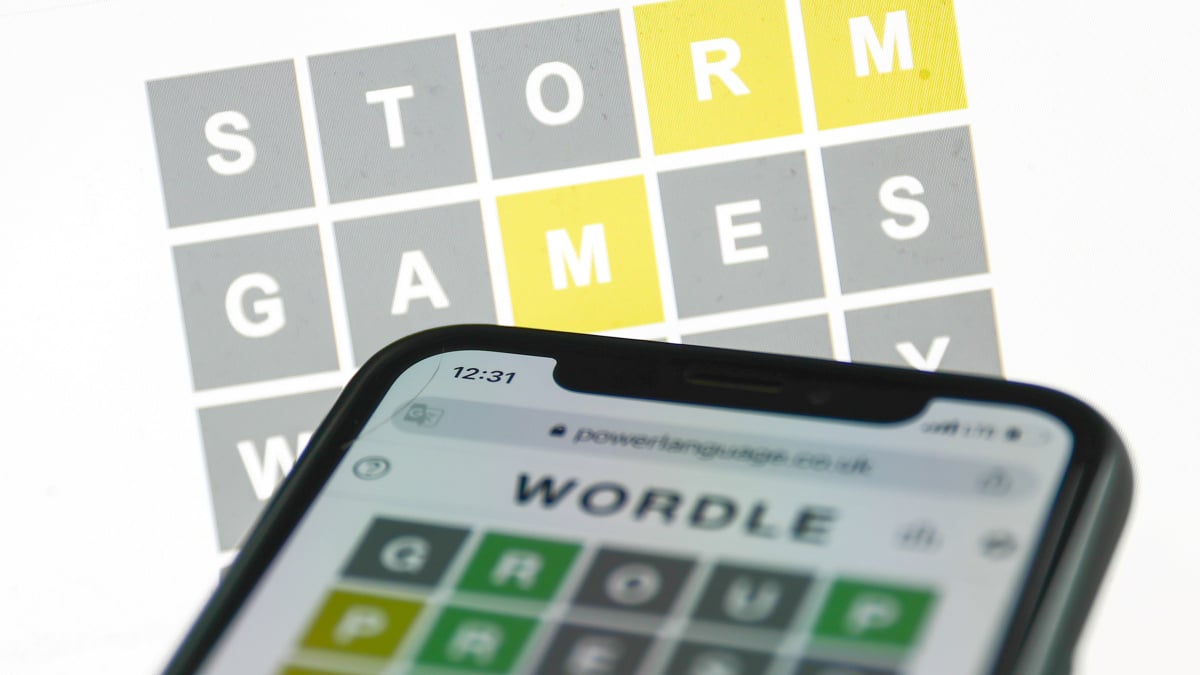
Image source: Mashable
How to Win Wordle Every Time Using Information Theory
As the game grew in popularity, players began looking for ways to optimize their guesses. While many rely on intuition, the most successful players often use principles from Information Theory. This mathematical approach focuses on reducing uncertainty with every guess.
Researchers at Binghamton University and other institutions have analyzed the Wordle dictionary to find the most efficient starting words. According to their models, a top-performing strategy involves choosing a starting word that eliminates the largest number of possible remaining words. Words like CRANE, SALET, and TRACE are frequently cited as among the strongest opening moves because they contain high-frequency letters in common positions.
NYT crossword constructor David Kwong suggests that players should focus not just on finding the right letters, but on the positional frequency of those letters. For example, while 'E' is the most common letter in English, it is much more likely to appear at the end of a word than at the beginning. Mastering these patterns allows players to achieve a success rate that, according to some information theory models, can reach as high as 99%.
Comparison: Original Site vs. NYT Version
| Feature | Original (powerlanguage) | NYT Version (Current) |
|---|---|---|
| Architecture | Static Javascript (No Backend) | Integrated Web App |
| Tracking | None / Privacy-Focused | NYT Analytics & Ad Pixels |
| Monetization | Completely Free | Ad-supported / Subscription Upsells |
| App Availability | Web Only (Deliberate) | Integrated into NYT Games App |
| Social Sharing | Plain Text Emoji Grid | Integrated Social API |
The New York Times Acquisition and the Future of the Domain
In early 2022, the New York Times announced it had purchased Wordle from Josh Wardle for a price "in the low seven figures." This move marked the end of the powerlanguage.co.uk/wordle era and the beginning of the game's life as a corporate asset. While the NYT promised to keep the game free "initially," the transition was met with some skepticism from the community.
On platforms like Hacker News, users expressed concern about "feature creep"—the tendency for simple products to become overly complicated over time. Since the acquisition, the NYT has integrated Wordle into its "Games" subscription, added a "WordleBot" for analysis, and introduced account syncing. While these features are helpful for some, they represent a departure from the stark simplicity of the original site.
Today, powerlanguage.co.uk serves as a landing page that reflects Josh Wardle's current identity as an artist and engineer. It links to his LinkedIn, his Twitter, and his current projects. It remains a top choice for those looking to understand the history of viral web design and the man who created a global phenomenon from a simple hobby project.
Frequently Asked Questions
No, the official home of Wordle is now the New York Times Games website. If you visit the original powerlanguage.co.uk/wordle URL, you will be automatically redirected to the NYT version. However, the root domain powerlanguage.co.uk still belongs to Josh Wardle and hosts his other creative projects and portfolio links.
The site was created and is maintained by Josh Wardle, a software engineer and artist. Wardle became famous for creating Wordle, but he is also known for his work at Reddit (creating "The Button" and "Place") and his time at the viral art collective MSCHF. He currently resides in Brooklyn, New York.
Technically, yes. Because the original game was a static Javascript application, copies of the original source code exist on the Wayback Machine and GitHub. By downloading these files, you can play the game in its original 2021 state. However, the "official" daily word is now controlled by the New York Times, so the words may eventually diverge.
Acptle is a competitive variant of Wordle currently hosted on Josh Wardle's domain. It involves playing six consecutive rounds of the word-guessing game to achieve the lowest possible total score. It is designed for players who want a more challenging and extended experience than the standard once-a-day puzzle.
Wardle has stated that the massive scale of Wordle became overwhelming for a solo creator. At its peak, the game had tens of millions of daily players, and managing the technical infrastructure and public attention was a significant burden. He felt the New York Times was a natural fit for the game's future given their history with high-quality puzzles.
Key Takeaways: The Legacy of Powerlanguage
The story of powerlanguage.co.uk is a reminder that simple, user-focused design can still win in a crowded digital world. Here are the core lessons from its history:
- Minimalism Wins: Wordle's success was driven by its lack of ads, logins, and notifications.
- Static Architecture: The game was a single Javascript file, making it fast, private, and playable offline.
- Anti-App Philosophy: Josh Wardle deliberately avoided the app store to protect the user experience from the attention economy.
- Social Rituals: The "once-a-day" mechanic created a shared global experience that couldn't be binged.
- Information Theory: Mastering the game involves mathematical strategies like maximizing entropy with starting words.
- Ongoing Innovation: The domain continues to host new experiments like Acptle for dedicated fans.
To experience the current state of Josh Wardle's creative work, you can visit the domain directly and explore the latest iterations of his social and logic experiments.