What Gundam TCG Products Should You Buy for the 2026 Season?
Understanding the Current Gundam TCG Product Landscape
Since its initial launch on July 12, 2025, the Gundam Card Game has evolved significantly. Early adopters experienced the game through what Bandai referred to as "Edition Beta," a testing and early-access phase that introduced the core mechanics via initial starter sets like Heroic Beginnings, Wings of Advance, Zeon's Rush, and SEED Strike. As documented by early community players in historical discussion threads, this beta phase was crucial for balancing the game's unique dual-deck system.
As of mid-2026, the game has fully transitioned out of the beta phase into its mature global rollout. The product landscape is now structured to support both casual collectors and highly competitive tournament players. Bandai has confirmed a robust organized play schedule, including the official 2026-2027 World Championship season, which has driven a surge in demand for competitive-grade products.
For new players entering the ecosystem today, navigating the product catalog requires understanding the distinct tiers of releases. The market currently offers standard expansion sets (Booster Boxes), specialized collaboration sets (Extra Boosters), entry-level preconstructed decks, and premium competitive decks. Furthermore, Bandai has integrated a digital onboarding tool—the official Teaching App—which allows players to practice the rules digitally before committing to physical product purchases.
Understanding this landscape is essential because purchasing the wrong product type can leave a new player either overwhelmed by complex mechanics or underpowered at their local game store. The 2026 product roadmap is dense, featuring multiple releases per quarter, making strategic purchasing highly recommended for anyone looking to build a viable deck without overspending.
How to Choose Between Starter Decks and Ultimate Decks
One of the most common points of confusion for new players is the distinction between standard Starter Decks and the newly introduced Ultimate Decks. While both are preconstructed and ready to play, they serve entirely different purposes and target different player demographics.
Starter Decks, such as the upcoming Generation Pulse [ST10], carry an MSRP of $15.99. These products are engineered specifically for entry-level players. They feature straightforward mechanics, focusing on basic deployment, piloting, and combat math. A standard Starter Deck includes a 50-card main deck, a 10-card resource deck, and a basic paper playmat. While excellent for learning, these decks typically lack the high-rarity staple cards required to compete at a high level.
In contrast, Ultimate Decks, like Destiny Ignition [ST09], are priced at $39.99. According to the official product specifications, these decks are designed for "full-scale battles" immediately out of the box. The higher price point is justified by the inclusion of highly sought-after competitive staples, complex command cards, and a higher distribution of foil and rare cards. For players intending to participate in local tournaments immediately, an Ultimate Deck is widely regarded as a highly efficient starting point.
| Feature | Starter Decks (e.g., ST10) | Ultimate Decks (e.g., ST09) |
|---|---|---|
| MSRP | $15.99 | $39.99 |
| Target Player | Beginners, Casual Fans | Competitive Players, Tournament Goers |
| Deck Composition | 50 Main + 10 Resource (Basic) | 50 Main + 10 Resource (Optimized) |
| Card Complexity | Low to Medium | High (Advanced Synergies) |
| Foil/Rarity Count | Standard distribution | High concentration of premium foils |
When deciding between the two, evaluate your immediate goals. If you are purchasing decks to play casually at the kitchen table with a friend, two standard Starter Decks provide an excellent, balanced experience. If you plan to attend weekly events at a local hobby store, investing in an Ultimate Deck will save you money in the long run, as you will not need to purchase as many single cards to upgrade your deck to a competitive standard.
Every Gundam TCG Release Scheduled for 2026
The 2026 release calendar is packed with expansions that introduce new mobile suits, pilots, and mechanics from across the franchise's extensive history. Staying aware of this schedule is vital for budgeting and ensuring you acquire the cards necessary for your preferred faction. Based on the official product list, here is the chronological breakdown of the 2026 season:
-
March 27, 2026: Destiny Ignition ST09
The year kicks off with the release of the first Ultimate Deck. Focused heavily on the Mobile Suit Gundam SEED Destiny era, this $39.99 deck introduces advanced mechanics tailored for competitive play, setting the baseline power level for the spring tournament season.
-
April 24, 2026: Phantom Aria GD04
The first major booster expansion of the year. Booster packs carry an MSRP of $4.99. This set expands upon the mechanics introduced in late 2025 and injects a significant number of new pilot cards into the meta, heavily featuring units from the Universal Century timeline.
-
June 26, 2026: Generation Pulse & Eternal Nexus ST10 EB01
A dual-release day. Generation Pulse serves as the mid-year standard Starter Deck ($15.99), offering an accessible entry point for summer players. Alongside it, Eternal Nexus launches as the game's first "Extra Booster" (EB01). Extra Boosters differ from standard sets by focusing on specific themes, collaborations, or alternative art variants rather than broad mechanical expansions.
-
July 24, 2026: Freedom Ascension GD05
The marquee summer booster set. Expected to heavily feature high-mobility units and advanced command cards, this set will likely define the meta leading into the fall regional championships.
-
September 25, 2026: The Fall Mega-Drop ST11-ST14
Bandai is releasing four distinct Starter Decks simultaneously: Aquatic Assault [ST11], Raging Onslaught [ST12], Silent Barrage [ST13], and Heavy Dominion [ST14]. This massive influx of preconstructed options is designed to support diverse playstyles, from heavy control to rapid aggression.
-
October 30, 2026: Stardust Trails GD06
The final confirmed major booster expansion of the year, closing out the 2026 competitive season with a focus on late Universal Century conflicts and heavy artillery units.
Why You Must Buy a Separate Resource Deck
A critical aspect of the Gundam TCG that frequently catches new players off guard is the game's resource system. Unlike traditional trading card games where resource cards (like lands or energy) are shuffled into the main deck, the Gundam Card Game utilizes a completely separate deck for resource generation.
According to the official Play Guide, a tournament-legal setup requires exactly two decks: a 50-card Main Deck (containing Units, Pilots, Commands, and Bases, restricted to a maximum of two colors and four copies of any single card) and a 10-card Resource Deck.
This design choice is highly impactful. By separating resources from the main deck, the game entirely eliminates the concept of "mana screw" or "mana flood"—situations where a player draws too few or too many resources, preventing them from playing the game effectively. In the Gundam TCG, players have guaranteed access to their resources, allowing for highly consistent and strategic gameplay.
However, from a purchasing perspective, this means you cannot simply buy a handful of booster packs and build a functional deck. Booster packs primarily contain main deck cards. While some resource cards may be pulled from packs, assembling a cohesive 10-card resource deck usually requires purchasing a Starter Deck, an Ultimate Deck, or buying the specific resource singles from a secondary market retailer. New players must ensure they have acquired a legal 10-card Resource Deck before attempting to play at local events.
Which Booster Packs Offer High Value for Collectors?
For collectors and players looking to upgrade their decks, choosing which booster boxes to invest in is a major decision. As of mid-2026, the market is primarily focused on the transition between Phantom Aria [GD04] and the upcoming Freedom Ascension [GD05].
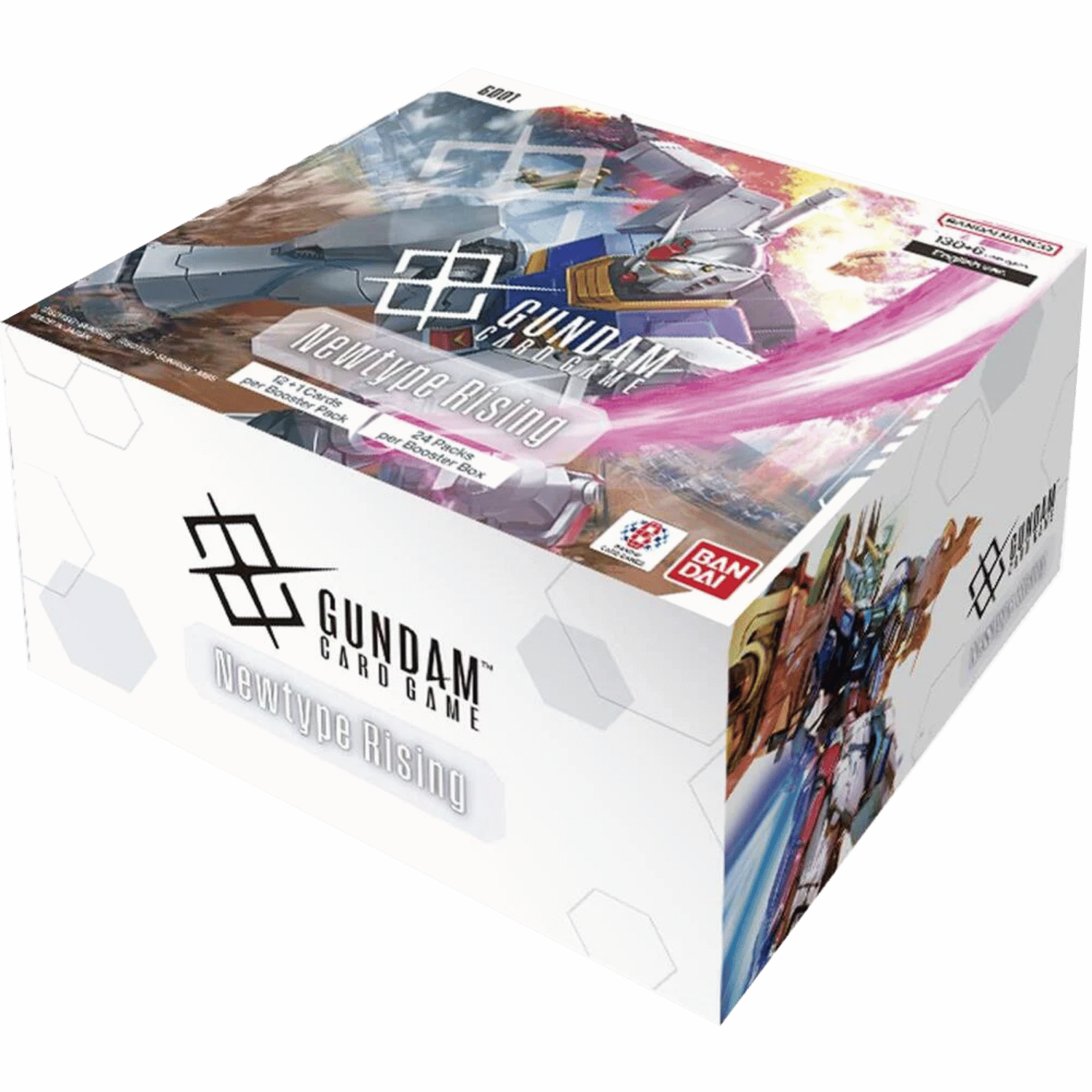
Image source: Game Nerdz
Currently, Phantom Aria [GD04] is showing strong secondary market performance. Retailers like Game Nerdz have listed recent booster boxes trending around $119.97. The value in these sets is largely driven by the inclusion of high-rarity Pilot cards and alternate-art Unit cards, which are highly prized by both competitive players needing playsets and franchise fans looking for display pieces.
The introduction of Eternal Nexus [EB01] in June introduces a new variable for collectors. Because "Extra Boosters" focus on specific themes and collaborations, they often feature unique foiling processes or artwork not found in standard sets. Historically, in similar Bandai card games, these specialized sets tend to hold their value well among collectors due to their distinct visual appeal and often limited print runs compared to mainline sets.
When deciding where to allocate your budget, consider your primary goal. If you need a wide variety of standard units and commands to build multiple decks, mainline sets like GD04 and GD05 are highly recommended. If you are hunting for rare, visually distinct cards for a binder collection, the EB01 Extra Booster is a strong contender.
How the Gundam Assemble Figures Change the Game
One of the most notably innovative features of the Gundam TCG ecosystem is its integration with physical models. Bandai has bridged the gap between their massive Gunpla (Gundam plastic model) division and the card game through the "Gundam Assemble" product line.
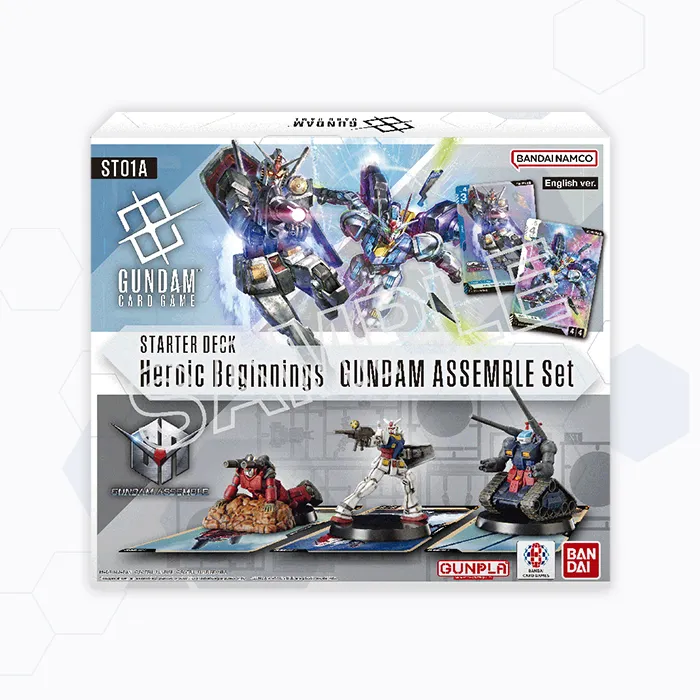
Image source: Gundam Card Game
Certain products, such as the early Heroic Beginnings and SEED Strike sets, feature collaborations with Gundam Assemble figures. These miniature, articulated figures are designed to be used directly on the playmat. In the context of the game's rules, these figures function alongside Token Cards. When a card effect generates a token unit on the battlefield, players can place the corresponding physical figure on the Token Card to represent that unit.
This creates a 3D, immersive tabletop experience that few alternatives compare to in the current TCG market. It visually distinguishes the Gundam Card Game from competitors that rely solely on flat cardboard. However, buyers should be aware of a practical caveat: the figures included in these sets often come unpainted or in basic molded colors. To achieve the highly detailed look seen in promotional images, hobbyists will need to paint and panel-line the figures themselves.
While entirely optional—you can play the game perfectly well using only the flat Token Cards—the Assemble figures represent a unique crossover product that appeals heavily to existing Gunpla builders looking to enter the card game space.
Advanced Buyer Strategy for the Amuro vs Kira Meta
For players focused on the competitive scene, purchasing decisions are driven by the current metagame. As of mid-2026, community analysis points to a meta heavily influenced by specific high-impact Pilot cards, often referred to in strategy discussions as the "Amuro vs. Kira" dynamic.
When buying singles or deciding which sets to open, understanding why these cards are valued is crucial:
- Amuro Ray (Pilot): This card is highly feared in competitive play because it effectively breaks fundamental rules of the mid-game. Amuro has the ability to delete an opponent's mid-game curve, punishing players who leave mid-tier (e.g., 5 HP) units on the board without a pilot attached. Sets containing Amuro variants are currently seeing high demand.
- Aile Kira: Kira provides massive card advantage, often generating a +1 or +2 in hand size upon deployment. In a game where resources are guaranteed, drawing extra action cards provides a significant mathematical advantage. However, advanced players note that Kira can sometimes be a liability if the opponent utilizes "on-deploy" effects that they want to trigger multiple times.
- The Guntank/Anksha Strategy: For budget-conscious players, the meta offers a viable "go-wide" aggro strategy. Even without complex ability damage (often called "pings"), simply flooding the board with efficient, low-cost bodies like Guntank or Anksha can overwhelm slower control decks. Players looking to build this deck should focus on early 2025 sets and standard Starter Decks where these basic units are plentiful.
By targeting products that contain these specific archetypes, players can build highly competitive decks without needing to purchase a playset of every high-rarity card in a given expansion.
Where to Buy Official Gundam TCG Accessories
Protecting your cards and organizing your play area is a fundamental part of the TCG experience. Bandai produces a range of official accessories, including card sleeves, deck cases, and playmats, which are released alongside major set expansions.
When purchasing playmats, it is highly recommended to acquire an official Gundam TCG mat or a custom mat specifically designed for the game's unique layout. The game requires specific zones that differ from other card games:
The game strictly limits players to a maximum of 6 units in the Battle Area at any one time. Official playmats feature a 6-slot grid, making it easy to track board state and preventing illegal deployments.
Players begin the game with 6 cards placed face down as shields. A dedicated zone keeps these separate from the hand and discard pile, ensuring clear communication of remaining life totals.
Because the 10-card Resource Deck is separate, official mats include specific zones for the Resource Deck and the active resource pool, keeping the play area organized.
Official sleeves are also a practical purchase. Because the Resource Deck must be easily distinguishable from the Main Deck to prevent accidental shuffling between games, players typically purchase two different colors or designs of sleeves for a single legal deck setup.
Why You Should Pre-Order Gundam Products Months in Advance
A critical piece of advice for anyone entering the Gundam TCG ecosystem is to understand the supply chain dynamics, often referred to by the community as the "Bandai Factor."
This trend has already impacted the Gundam Card Game. According to community supply reports, specific items like the Seed Strike Assemble ST04a kit experienced severe shortages shortly after launch, making them difficult to find at MSRP.
To ensure you secure products like the upcoming Freedom Ascension [GD05] booster boxes or the highly anticipated September Mega-Drop Starter Decks [ST11-ST14] at their intended retail price, it is strongly advised to place pre-orders with your local game store or reputable online retailers 3 to 5 months in advance of the official release dates.
Frequently Asked Questions
- What is the latest Gundam TCG set release?
- As of mid-2026, the most recent major releases are Generation Pulse [ST10] and the Eternal Nexus [EB01] Extra Booster in June, with Freedom Ascension [GD05] scheduled to follow in July 2026.
- How many cards are in a legal Gundam TCG deck?
- A tournament-legal setup requires exactly 60 cards total, divided into two distinct decks: a 50-card Main Deck (containing units, pilots, commands, and bases) and a separate 10-card Resource Deck.
- Is there a digital version of the Gundam Card Game?
- While there is no full digital client for competitive play, Bandai has released an official "Teaching App" for mobile devices. This app is designed to help new players learn the rules, practice basic mechanics, and understand the flow of a match before buying physical cards.
- What is the difference between a Booster Pack and an Extra Booster?
- Standard Booster Packs (like GD04 or GD05) are mainline expansions that introduce broad mechanical changes and large pools of new cards for all factions. Extra Boosters (like EB01) are specialized, often smaller sets that focus on specific themes, franchise collaborations, or alternative artwork.
- Are Gundam Assemble figures required to play?
- No. The physical Gundam Assemble figures are entirely optional. They are designed to be placed on top of Token Cards to create a 3D visual experience on the playmat, but the flat Token Cards alone are perfectly legal and sufficient for all levels of play.
- Where can I find the 2026 World Championship schedule?
- Bandai has confirmed the 2026-2027 organized play season. Specific dates for regional qualifiers and the World Championship can be found on the official Gundam Card Game website under the "Events" or "Organized Play" sections, which are updated quarterly.
Final Thoughts on Building Your Collection
Navigating the 2026 Gundam TCG product lineup requires balancing your budget against your competitive goals. With a dense release schedule and distinct product tiers, strategic purchasing is essential for building a capable deck.
- Choose an Ultimate Deck ($39.99) if you want immediate tournament viability and staple cards.
- Start with a standard Starter Deck ($15.99) if you are strictly playing casually or learning the mechanics.
- Remember the strict requirement to build a separate 10-card Resource Deck to play legally.
- Target GD04 and GD05 booster boxes for broad collection expansion and high-rarity pilot cards.
- Consider the EB01 Extra Booster if you prioritize unique themes and alternative artwork.
- Prepare for the September 25 release window, which brings four new Starter Decks simultaneously.
- Utilize the official Teaching App to practice mechanics before committing to physical purchases.
- Pre-order upcoming sets 3 to 5 months in advance to avoid secondary market markups and supply shortages.