What Happens to Frisk at Level 20 in Undertale?
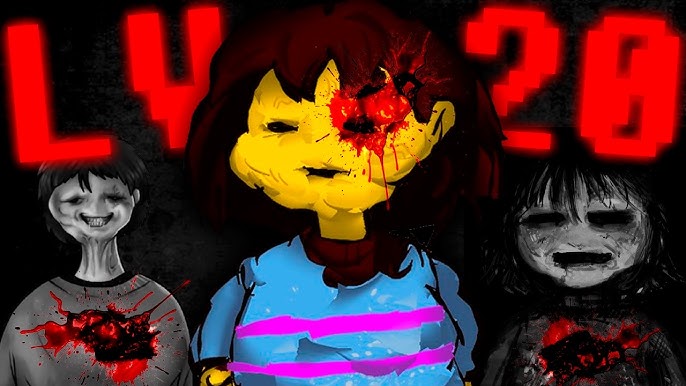
Image source: YouTube
The Meaning of LV 20 and the Level of Violence
To understand the significance of Frisk reaching Level 20, it is necessary to look at how the creator of Undertale, Toby Fox, subverted traditional role-playing game mechanics. In standard RPGs, gaining levels is a sign of progress, heroism, and strength. In Undertale, the acronyms carry a much darker, psychological weight.
As explained by the character Sans late in the game, EXP stands for "Execution Points," and LV stands for "Level of Violence." According to the game's internal lore, LV is a quantifiable measurement of a person's capacity to hurt others. As a character's LV increases, they become emotionally detached, making it easier for them to inflict pain without feeling remorse. Reaching LV 20 represents the absolute peak of this emotional detachment—a state of total apathy toward the lives of others.
Achieving LV 20 is not something that happens by accident. It requires the player to commit to a flawless Genocide Route. This involves grinding random encounters in every zone (Ruins, Snowdin, Waterfall, and Hotland/Core) until the message "But nobody came" appears. The final leap from LV 19 to LV 20 occurs only after the grueling battle against Sans in the Last Corridor. Defeating him grants the final surge of Execution Points necessary to hit the level cap.
- Base Stats at LV 20
- Without any equipment, Frisk's base stats at this level are 99 HP, 38 Attack (ATK), and 4 Defense (DEF).
- Maximized Stats
- When equipped with the "Real Knife" and "The Locket" found in Asgore's home, the stats artificially inflate to 99 ATK and 99 DEF, representing the character's absolute peak offensive and defensive capabilities within the game's code.
Mechanically, once LV 20 is reached, the traditional combat system is essentially abandoned. The final encounters in the throne room do not feature standard bullet-hell dodging; instead, they are narrative executions that happen automatically, signaling that the player's role in the combat loop has ended.
Why the Deformed Frisk Trend Went Viral
While the canonical events of the Genocide Route have been known since the game's release in 2015, a massive resurgence of interest occurred in late 2025. This was driven not by a game update, but by a viral fan-art trend that reimagined what a Level 20 human might actually look like.
The trend traces its origins to October 9, 2025, when X (formerly Twitter) user @marshballs_ posted a piece of fan art depicting Frisk undergoing a grotesque physical mutation. The artwork leaned heavily into the "Analogue Horror" aesthetic—a subgenre characterized by VHS-style visual degradation, uncanny valley facial distortions, and unsettling, cryptic storytelling. In this interpretation, the accumulation of LV physically warped Frisk's body, resulting in elongated limbs, a distorted face (often referred to by the community as the "stung-by-bees" look), and a generally monstrous silhouette.
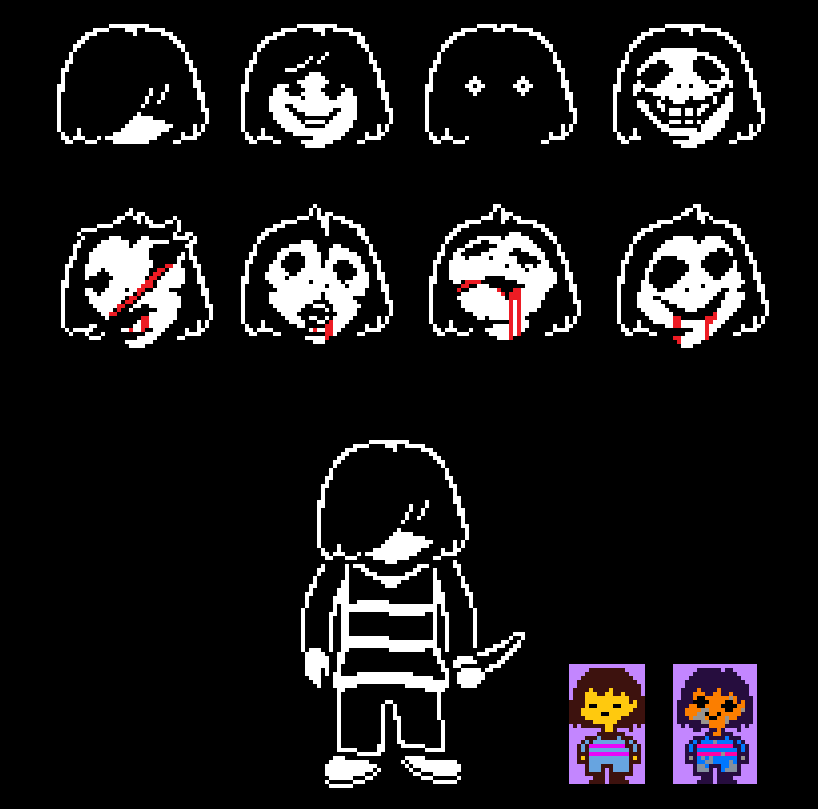
Image source: x.com
The virality of this concept was staggering. The original post amassed over 7 million views and 40,000 likes within a matter of days. It struck a chord with a new generation of fans who were highly engaged with internet horror tropes, such as those seen in the Mandela Catalogue or FNAF VHS series. Soon, other prominent fan artists, including @carloscarloswas and @MiaoGo06, began contributing their own variations of the "Scary Frisk" design, cementing it as a major community trend.
The appeal of the trend lies in its visual shock value. Undertale is largely presented in a charming, retro pixel-art style. Injecting hyper-detailed, unsettling body horror into that familiar framework creates a stark contrast that performs exceptionally well on algorithm-driven platforms like TikTok and X.
Is the Physical Mutation Canon to the Game?
Given the widespread popularity of the deformed Frisk designs, many newer fans began asking if this physical transformation actually happens in the game. The definitive answer is no. The physical mutation is entirely a fan-made concept.
In the canonical game files and actual gameplay, Frisk's overworld sprite remains completely unchanged from LV 1 to LV 20. They retain the same striped shirt, neutral expression, and standard human proportions throughout the entire Genocide Route. However, the fan theory does draw inspiration from specific lines of in-game dialogue that artists have chosen to interpret literally rather than metaphorically.
During the Genocide Route, several characters comment on the protagonist's unsettling aura. Flowey remarks that the protagonist is "not really human," while Asgore, upon seeing the player character in the throne room, fails to recognize them as a human at all, asking what kind of monster they are. Additionally, when inspecting the mirror in New Home, the text famously changes from "It's you!" to "It's me, Chara."
In the context of the game's original writing, these moments are meant to convey a psychological and spiritual shift. The protagonist has become so devoid of empathy and so saturated with violence that their "soul" no longer registers as human to the monsters. The 2025 trend simply took this metaphorical loss of humanity and translated it into literal body horror.
Comparing Canon Game Facts to Fan Theories
To clarify the boundaries between what Toby Fox programmed into Undertale and what the community popularized a decade later, it is helpful to look at a direct comparison of the lore.
| Feature | Canon (In-Game Reality) | Fanon (2025/2026 Viral Trend) |
|---|---|---|
| Physical Appearance | Standard human sprite; no visual changes occur at any level. | Deformed, elongated limbs, distorted facial features, monstrous silhouette. |
| Character Control | Control is gradually wrested from the Player by Chara. | Frisk is often depicted as a mindless, instinct-driven beast. |
| The Ending | The world is erased via a menu prompt by Chara. | A physical transformation into a new, terrifying entity occurs. |
| Source of Power | Determination, EXP, and equipped stat-boosting items. | Biological mutation and physical adaptation to violence. |
This divergence highlights how gaming communities evolve. While the canon remains static, the "fanon" (fan canon) continuously shifts to incorporate modern internet aesthetics. For a deeper dive into how these concepts are visualized, community analysis videos often break down the concept of Frisk at Level 20, separating the original pixel art from modern interpretations.
The Media Literacy Debate in the Undertale Fandom
The explosion of the deformed Frisk trend did not happen without controversy. In fact, it sparked a massive debate across Reddit and X regarding "media literacy"—a term that has become a flashpoint in modern fandom discussions.
Veteran Undertale fans, many of whom have been active since the game's 2015 launch, argued that the trend represents a fundamental misunderstanding of the game's core themes. Their critique centers on the idea that turning the Genocide Route into a literal monster movie cheapens the emotional impact of the story. The horror of the Genocide Route is supposed to be psychological: the terrifying realization that a perfectly normal-looking child is capable of systematically eradicating an entire species simply because the player wanted to see what would happen.
"When Asgore says you don't look human, he isn't talking about your face melting. He's talking about the fact that you are projecting an aura of pure, unadulterated malice. Making Frisk physically ugly misses the point that evil often looks completely ordinary."
Critics of the trend often label it as "edgy," comparing it to the early 2010s era of creepypastas (like Sonic.exe or Ben Drowned), where adding hyper-realistic blood or distorted faces was the default method for making a game scary. They argue that Undertale's writing is more sophisticated than basic body horror.
Conversely, defenders of the trend argue that Alternate Universes (AUs) have always been a foundational pillar of the Undertale fandom. They point out that fan art is inherently transformative. Reimagining a metaphorical concept as a physical reality is a valid artistic exercise, not necessarily a failure of media literacy. For these artists, the analogue horror aesthetic is simply a new lens through which to explore the game's darkest themes.
How Powerful Is Frisk at Level 20?
Moving away from aesthetics and into the realm of power scaling, LV 20 Frisk is widely regarded as one of the most formidable entities in indie gaming lore. In communities dedicated to cross-universe hypothetical battles (such as the VS Battles Wiki), Frisk at the end of the Genocide Route is typically assigned a tier of 2-B to 2-C (Multiversal).
This high ranking often surprises casual players who view Frisk as just a child with a knife. However, power scaling in Undertale is based on reality manipulation rather than physical lifting strength or speed. At LV 20, the protagonist possesses enough Determination to completely erase the game's universe—the timeline, the characters, and the underlying code itself. When Chara strikes the final blow, the damage numbers overflow the screen, resulting in the destruction of the world.
When matched against characters from other universes (like Goku from Dragon Ball or Saitama from One Punch Man), analysts argue that Frisk's primary advantage is their control over the timeline. The ability to SAVE, LOAD, and essentially refuse to die means that Frisk can theoretically fight an opponent an infinite number of times until they secure a victory. At LV 20, this Determination is weaponized to its absolute limit, making them an exceptionally strong contender in any hypothetical matchup.
Who Is Really in Control at the End?
One of the most complex narrative questions surrounding LV 20 is the issue of agency. Who is actually swinging the knife at the very end of the game? Is it the Player, Frisk, or Chara?
According to the game's mechanics and dialogue, reaching LV 20 marks the point where the Player loses their agency. Throughout the Genocide Route, the game subtly indicates that Frisk is acting independently of the player's inputs. Characters are engaged in combat without the player pressing a button, and puzzles are solved or ignored automatically.
By the time the player reaches the throne room, the entity known as Chara (the first fallen human) has fully awakened, fueled by the EXP and LV the player has gathered. Chara explicitly states that they are the embodiment of the feeling the player gets when a stat increases—when HP, ATK, or LV goes up. At LV 20, Chara takes the reins completely, delivering the final, fatal strikes to Sans, Asgore, and Flowey without waiting for the player's command.
This loss of control has permanent consequences. If the player agrees to erase the world, or even if they refuse, the game is fundamentally altered. To play the game again, the player must "sell their soul" to Chara to restore the world. This taints the save file permanently, ensuring that any future True Pacifist endings are subtly corrupted, reminding the player that their actions at LV 20 cannot be undone.
LV 20 Mechanics in Fan Games and AUs
The fascination with the Genocide Route has led to the creation of countless fan games and Alternate Universes (AUs) that expand upon the mechanics of LV 20. Because the base game ends shortly after reaching this milestone, fan developers have taken it upon themselves to explore what happens next.
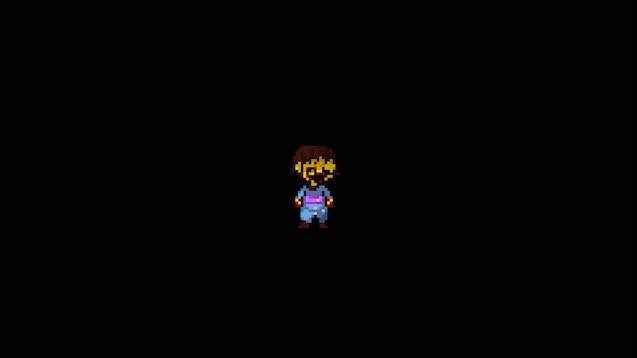
Image source: Steam Community
In many of these multiversal timelines, developers introduce a "LV 19 transformation" stage. This serves as a narrative bridge, showing the protagonist struggling with the overwhelming influx of power before fully succumbing to Chara's influence at LV 20. These fan games often feature expanded, highly difficult boss fights that require the player to utilize their maxed-out stats against equally overpowered versions of classic monsters.
Projects like Dusttale or various Underfell interpretations use the concept of LV to justify massive difficulty spikes. In these scenarios, the lore of LV 20 is treated not just as an ending, but as a starting point for entirely new, community-driven narratives where timeline manipulation and multiversal travel become standard gameplay mechanics.
Frequently Asked Questions
Can you reach LV 20 in a Pacifist run?
Who created the scary deformed Frisk design?
Does Frisk physically turn into Chara at LV 20?
What are the maximum stats for Frisk?
Is the LV 20 trend related to analogue horror?
Final Takeaways
The lore surrounding Frisk at Level 20 is a fascinating blend of Toby Fox's original, subversive game design and the ever-evolving creativity of the internet fandom. While the game presents a story of psychological detachment, the community has expanded it into a visual horror phenomenon.
- LV 20 is exclusive to the Genocide Route and is only achieved after defeating Sans in the Last Corridor.
- The "deformed" appearance is a viral fan-art trend from late 2025, not a canonical game update or hidden sprite.
- Chara takes control at the end of the route, representing the player's desire for stat progression and completionism.
- Reaching this level taints your game permanently, altering the ending of any future True Pacifist runs you attempt.
- Power scaling communities rank LV 20 Frisk as a Multiversal (Tier 2-B) threat due to their ability to erase timelines and manipulate reality.
If you plan to experience the Genocide Route yourself, be prepared for the permanent consequences it will leave on your save file and your perception of the game's world.