Effective escape room puzzle design centers on the "Aha!" moment—the psychological shift from confusion to sudden insight. A high-quality puzzle must be fair, logical, and thematic, ensuring players feel clever rather than frustrated. Key principles include providing internal validation (knowing you're right before trying a lock), eliminating "moon logic" (obscure leaps), and ensuring accessibility for all players, including those with color blindness or mobility limitations.
Why the 'Aha!' Moment Is the Heart of Every Great Puzzle
At its core, an escape room is not selling a physical space or a collection of locks; it is selling a specific neurological experience known as the "Aha!" moment. This phenomenon, often referred to as sudden insight, occurs when the brain reinterprets a set of clues and arrives at a solution through a non-linear leap. According to research on the art of puzzle design, this moment is the primary product of the industry.
The Role of Dopamine in Player Satisfaction
When a player solves a challenging puzzle, the brain releases a surge of dopamine. This reward response is what makes escape rooms addictive. However, the timing of this release is critical. If a puzzle is too easy, the dopamine hit is negligible. If it is too difficult, the player enters a state of frustration that blocks the reward pathway. A successful designer crafts a series of small wins that build momentum, keeping the player engaged even when the final challenge looms.
Balancing the Flow State
Psychologist Mihaly Csikszentmihalyi’s concept of "Flow" is essential here. Flow is the "sweet spot" between boredom and anxiety. In escape room design, this means matching the puzzle's difficulty to the player's perceived skill level. As the game progresses, the complexity should scale. By starting with simple "onboarding" puzzles, you teach players the "language" of your room, preparing them for the more intense challenges in the final act.
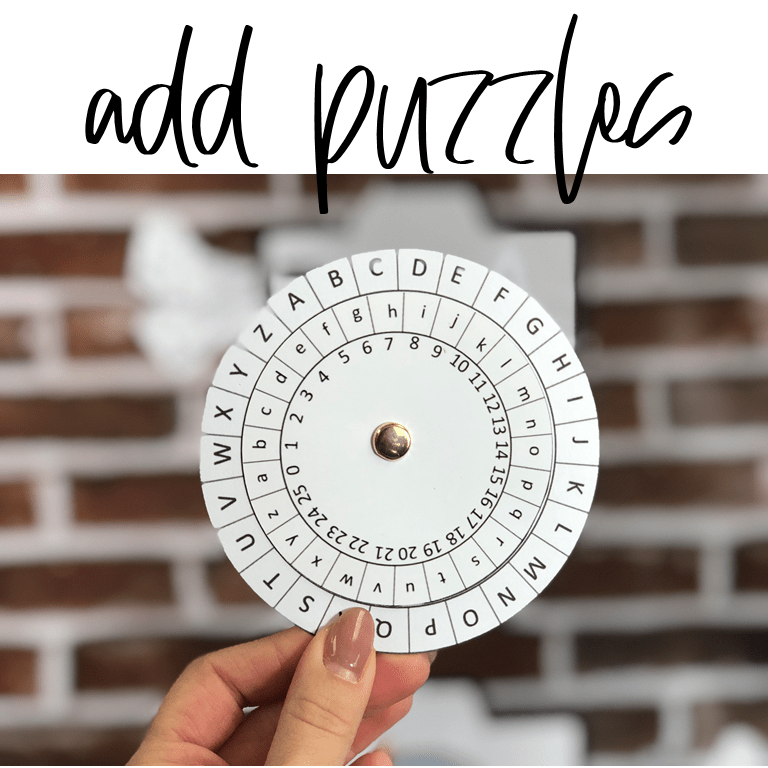
Image source: Jenna Copper
How to Design Puzzles That Feel Fair and Logical
Fairness is the foundation of player trust. Once a player feels a puzzle is "unfair," they stop looking for logical solutions and start guessing, which ruins the immersion. The Codex Rules for Puzzle Design emphasize that the designer should be the player's advocate, not their adversary.
Validation Without Input
One of the hallmarks of professional design is "internal confirmation." A player should be reasonably certain they have the correct answer before they ever touch a lock. For example, if a puzzle requires finding four numbers, and those numbers are found in a way that clearly spells out a significant date related to the story, the player receives an immediate psychological reward. They don't need the lock to open to know they've succeeded; the logic itself confirms the win.
Eradicating Ambiguity in Codes and Keys
Ambiguity is the enemy of fun. Designers must be meticulous about how information is presented. Common failure points include:
- Date Formats: Always clue whether a date should be DD/MM/YYYY or MM/DD/YYYY.
- Leading Zeros: If a lock requires a four-digit code but the answer is 42, explicitly clue the "00" prefix.
- Lock Types: If a room has multiple five-letter locks, ensure each puzzle clearly points to a specific location or lock to avoid "brute-forcing" every container in the room.
Common Design Pitfalls That Ruin the Player Experience
Even the most creative themes can be undermined by poor puzzle logic. Avoiding these common traps is what separates professional experiences from amateur attempts.
The Danger of Moon Logic
"Moon logic" refers to puzzles that require a leap of faith so obscure that no reasonable person could solve it without a hint. An example would be needing to count the number of buttons on a mannequin's jacket to find the first digit of a safe, with no clue suggesting the mannequin is relevant. To fix moon logic, always provide a "bridge"—a thematic reason why the player should look at those specific buttons.
Why Red Herrings Are Fading from Modern Design
In the early days of escape rooms, "red herrings" (intentional distractions) were used to pad the time. However, modern player sentiment has shifted. As noted in various community discussions, red herrings often lead to frustration rather than a sense of challenge. If a prop looks like a clue but isn't, it's usually better to remove it or make it clearly decorative.
Avoiding Math for Math’s Sake
Few things kill the momentum of a high-stakes heist like a long-division worksheet. If you include math, it should be integrated into the world. Instead of a math problem on a wall, have players weigh "gold nuggets" on a scale to find a total weight. This transforms a schoolwork task into a tactile, thematic interaction.
18 Puzzle Archetypes You Can Use to Build Your Room
A diverse range of challenges ensures that every member of a group—whether they are logical, physical, or linguistic thinkers—has a chance to shine. According to Red Door Escape Room, variety is key to maintaining engagement.
| Archetype | Best For | Difficulty Level |
|---|---|---|
| Searching | Onboarding/Early Game | Low |
| Symbol Substitution | Mid-game Logic | Medium |
| Physical Assembly | Tactile Players | Medium |
| Audio/Sound Clues | Sensory Immersion | Medium |
| Strategic Thinking | Late-game Climax | High |
| Abstract Logic | Experienced Groups | High |
Deep Dive into Core Categories
Beyond the table, designers often utilize Physical Manipulation (mirrors, magnets, or hidden compartments) to create "magic" moments. Mental Logic puzzles, such as ciphers or pattern recognition, provide the intellectual meat of the game. Finally, Sensory Puzzles—using blacklights, textures, or even scents—can ground the player in the environment, making the experience feel more like a movie than a game.
How to Make Your Escape Room Accessible to Every Player
Accessibility is often overlooked in puzzle design, yet it is a critical component of a high-quality experience. An inclusive room ensures that no player is sidelined due to physical or cognitive differences.
Designing for Color Blindness
Color-based puzzles are common but can be impossible for players with color vision deficiency (CVD). To fix this, always use a secondary identifier. If you have colored wires, give each color a unique texture or a printed symbol. This "double-coding" ensures the puzzle is solvable by everyone without changing the core mechanic.
Physical Mobility and Reach
Ensure that essential clues are not hidden in crawl spaces or on high shelves without providing an alternative way to access that information. If a physical task is required, consider if a player in a wheelchair could complete it. Providing "reach tools" or designing the room with a wider layout can make a significant difference.
Managing Cognitive Load
Avoid puzzles that require massive short-term memory (e.g., listening to a 10-digit sequence and repeating it). Instead, provide "external memory" tools like chalkboards, notebooks, or dry-erase markers. This allows players to focus on the logic of the solve rather than the stress of memorization.
Structuring the Gameflow for Maximum Impact
The way puzzles connect is just as important as the puzzles themselves. The "flow" of the room determines the pacing and how the group interacts.
Linear Paths
Puzzles must be solved in a specific order (A -> B -> C). This is excellent for storytelling and smaller groups, as it ensures everyone sees every narrative beat. However, it can lead to "bottlenecking" in larger groups.
Non-Linear Paths
Multiple puzzles are available at once, converging at a "meta-puzzle." This is a top choice for large groups, as it allows players to split up and work on different tasks simultaneously, keeping everyone active.
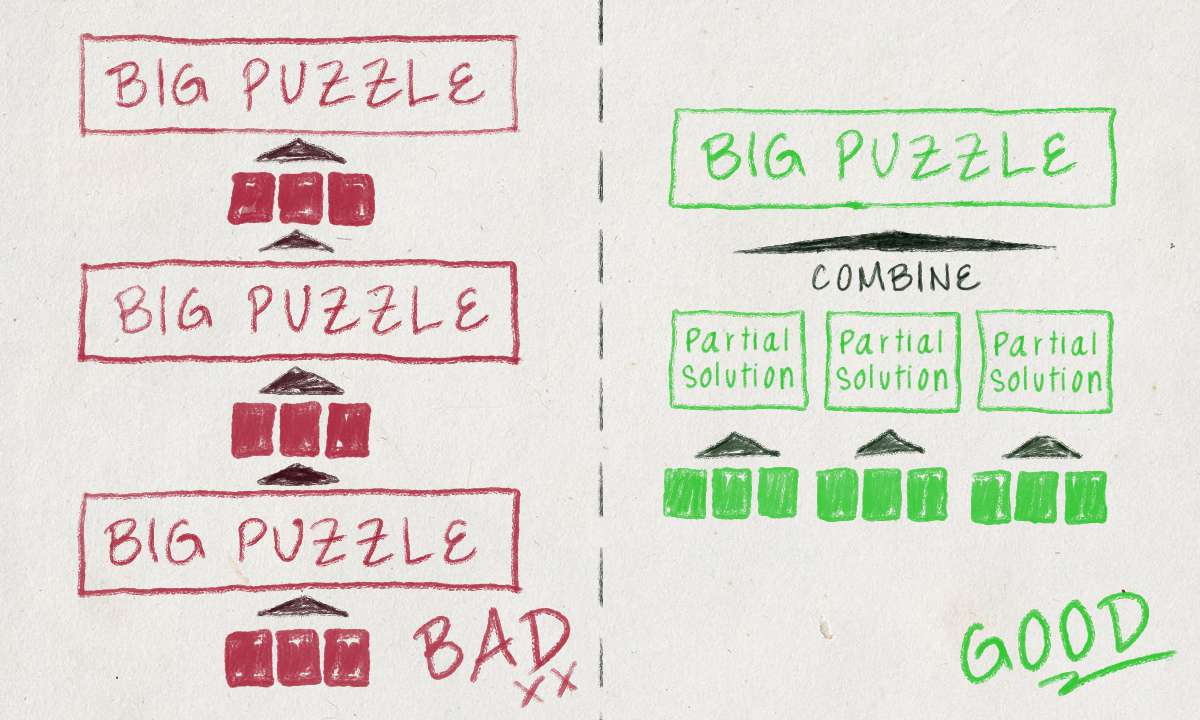
Image source: Lock Paper Scissors
Integrating Puzzles into the Narrative Seamlessly
A puzzle should never feel like a "game mechanic" that pauses the story. Instead, it should be the story. Dr. Scott Nicholson, a leading expert in the field, advocates for the concept of meaningful play, where every action the player takes advances the narrative.
The Narrative Justification Test
Before finalizing a puzzle, ask: "Why would this exist in this world?" If you are in a 1920s detective office, a high-tech laser grid feels out of place. However, a hidden compartment in a roll-top desk feels natural. The more a puzzle fits the setting, the more "invisible" the design becomes, leading to deeper immersion.
Multi-Sensory Immersion
Use soundscapes, lighting shifts, and even temperature changes to signal progress. When a player solves a major puzzle, the room should react. A change in the background music or a flickering light provides immediate feedback that something in the world has changed, reinforcing the impact of their actions.
The Essential Process for Testing and Iteration
No puzzle is perfect on the first draft. "Designer blindness" is a real phenomenon where the creator cannot see the flaws in their own logic because they already know the answer.
- Concept & Paper Prototyping: Sketch out the logic on paper to ensure the steps make sense before building anything.
- Alpha Testing: Have friends or colleagues run through the puzzle in a "white box" environment to find obvious logic gaps.
- Beta Testing: Bring in players who represent your target demographic. Observe them through cameras without intervening.
- Iteration: Use the data from beta tests to simplify confusing clues or add "signposting" where players got stuck.
Key Takeaways for Puzzle Designers
Building a memorable escape room requires a balance of psychology, logic, and storytelling. Here are the essential principles to remember:
- Prioritize the 'Aha!' moment by balancing difficulty and skill to maintain a flow state.
- Ensure internal validation so players know they are correct before interacting with locks.
- Eliminate moon logic by providing thematic bridges between clues and solutions.
- Design for accessibility using double-coding for colors and considering physical reach.
- Scale complexity gradually to onboard players and build momentum toward the climax.
- Integrate puzzles narratively so every challenge feels like a natural part of the world.
- Test and iterate relentlessly to remove designer bias and refine the player experience.
Start your design process by identifying the core narrative goal, then build your puzzles as the stepping stones that lead the player toward that story's conclusion.