
In the vibrant world of Stardew Valley, the Amethyst stands out as one of the most versatile minerals available to early-game players. While it may not command the high market price of a Diamond or the utility of Iridium, its accessibility and social value make it a cornerstone of a successful farm. Whether you are looking to win the heart of a certain purple-haired villager or seeking to complete your Museum collection, understanding the nuances of this gem is essential.
It is important to clarify a common point of confusion: while Amethyst is a variety of quartz in the real world, it does not function as "Quartz" or "Refined Quartz" within the game's crafting recipes. According to the official Stardew Valley Wiki, Amethyst is strictly classified as a Mineral and a Gem, meaning you cannot smelt it in a furnace to produce building materials. Instead, its value lies in gifting, tailoring, and specific quest completions.
The Mines, located in the northeast corner of the map, serve as the most reliable source for Amethyst. Unlike rarer gems that only appear deep within the earth, Amethyst begins spawning as early as Floor 1. However, the density and frequency of these spawns change as you descend.
The most direct way to obtain this gem is by mining Amethyst Nodes. these appear as small, purple-tinted rocks embedded in the mine floor. You can also find them inside Gem Nodes, which have a chance to drop any type of gemstone when broken. While these nodes can appear on any floor, they are notably more frequent in the first 40 levels of the Mines. Once you pass Floor 40, the spawn pool expands to include Aquamarine and Emerald, which can slightly dilute the appearance rate of Amethyst.
Beyond mining nodes, you should keep a keen eye on the environment. Crates and barrels found on floors 1 through 39 have a specific chance to drop Amethysts when smashed. This drop table changes once you reach the frozen levels (Floor 40+), so if you are specifically hunting for this purple gem, staying in the upper levels is a top-tier choice. Additionally, Green Slimes—the most common early-game enemy—have a 1.5% chance to drop an Amethyst upon defeat. While this percentage seems low, the sheer volume of slimes encountered makes it a consistent secondary source.
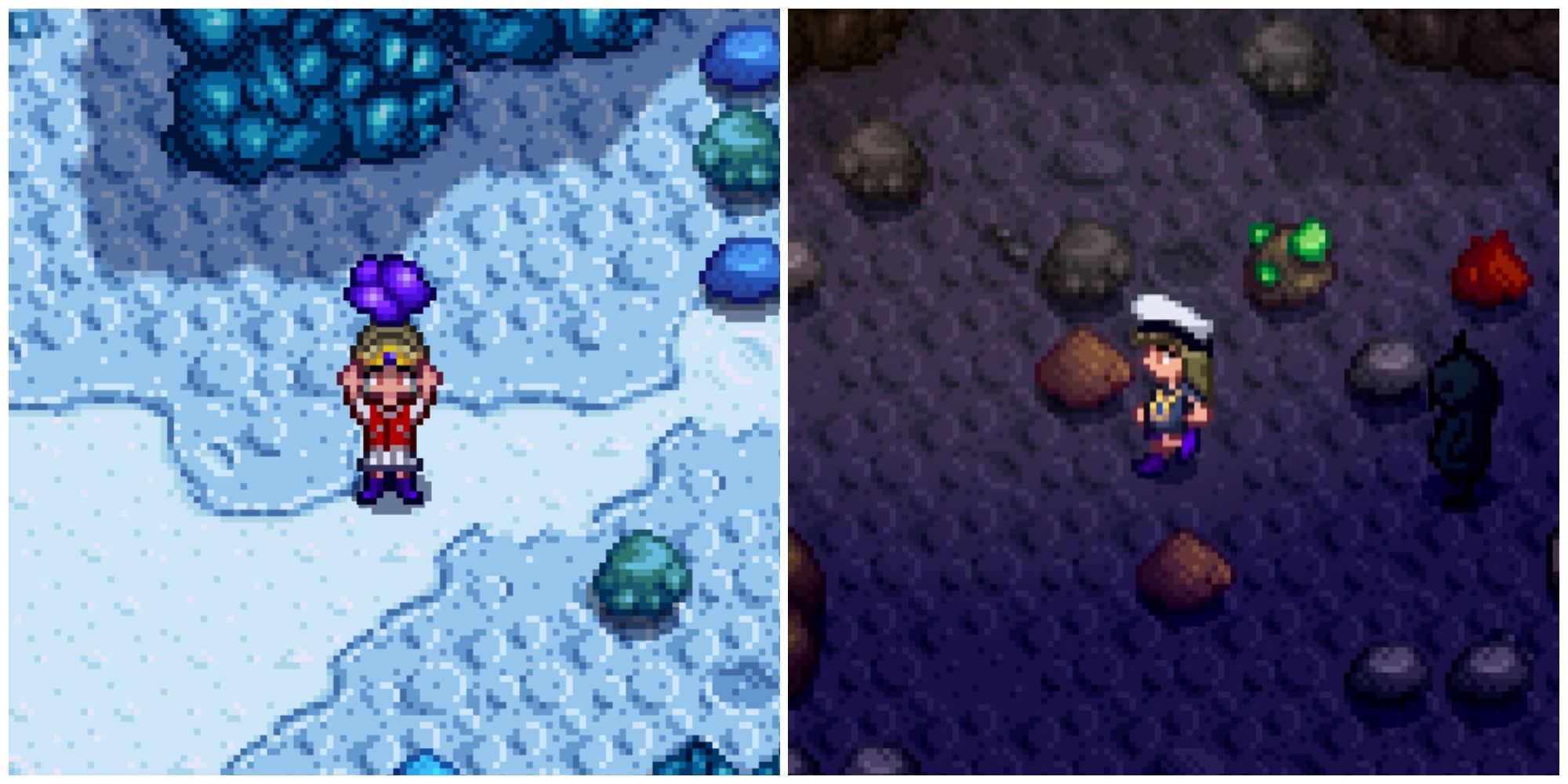
For players who need a large quantity of Amethysts quickly—perhaps for a "Help Wanted" quest or to stockpile gifts—the "Elevator Loop" is a highly effective method. This strategy takes advantage of how the game resets mine floors when you leave and re-enter.
This "Mine Grind" method, which has been refined by the community for version 1.6, allows you to check dozens of potential spawn points in a single in-game hour. By focusing on the range of Floors 30–35, you also maximize your intake of Copper Ore, making this a resource-efficient route for early-game progression. According to veteran players on the Steam Community forums, this loop is significantly faster than clearing floors linearly.
Gifting is perhaps the most common use for Amethyst. Because it is relatively easy to find, it serves as a reliable way to build friendships early in the game. However, not every villager shares the same enthusiasm for this purple stone.
Widely known for her unique dialogue where she asks if the gem is "delicious," Abigail is the primary target for Amethysts. It is a top choice for speed-running her friendship levels.
Both the local tailor and the blacksmith love Amethysts. Clint values them for their mineral properties, while Emily appreciates their spiritual energy.
Most other villagers, including Robin, Demetrius, and Gus, "Like" Amethyst. It is a safe inventory filler for general social rounds.
Be cautious when gifting to Leah, Linus, or Pierre. These three characters are among the few who dislike or even hate receiving Amethyst. Pierre, in particular, has a negative reaction, which is ironic considering his daughter's fondness for the stone. For most other NPCs, the Amethyst provides a solid +45 friendship points, while a "Love" reaction from Abigail or Emily grants +80 points.
One of the most common pitfalls for new players involves the "Clint's Attempt" quest. This quest arrives in your mailbox on the 6th of Winter (Year 1). Clint asks you to bring an Amethyst to Emily and tell her it is from him. This quest is notorious for being a "trap" due to how the game handles item hand-offs.
The confusion stems from the fact that Clint is the one who gives you the quest. Many players instinctively take the Amethyst to Clint at the Blacksmith shop. If you do this, Clint will accept the Amethyst as a standard gift. He will be happy, but the quest will not complete, and you will have wasted the gem. To succeed, you must have the Amethyst in your inventory and speak directly to Emily. A special dialogue sequence will trigger, Emily will thank you (and Clint), and you will receive a friendship heart with her as a reward.
This quest highlights a recurring theme in Stardew Valley: always read the journal entry carefully. As noted in discussions on the Chucklefish Forums, failing this quest is a frequent source of frustration, but it is easily avoided by remembering that Emily is the intended recipient, not the quest-giver.
Once you have unlocked the Sewing Machine (by obtaining your first piece of Cloth), Amethyst opens up several aesthetic options. It is a highly recommended mineral for players who enjoy customizing their character's appearance.
By placing a piece of Cloth in the feed and an Amethyst in the spool of the Sewing Machine, you can craft the Amethyst on a Chain shirt. This is a stylish, dark-purple garment featuring a visible gem pendant. It is one of the more distinct jewelry-themed clothing items available in the early game.
Amethyst is also a "Strong" purple dye. When using the dye pots in Emily’s house, an Amethyst will provide a significant boost to the purple color bar, often requiring fewer items to reach your desired hue compared to using grapes or sweet peas. In the late game, once you reach the Volcano Forge on Ginger Island, Amethyst takes on a functional role. You can use it to upgrade your weapons, specifically adding a Knockback enchantment. This is particularly useful for players who prefer a defensive combat style, keeping dangerous enemies like Serpents at a distance.
| Forge Level | Resource Cost | Knockback Bonus |
|---|---|---|
| Level 1 | 1 Amethyst + 10 Cinder Shards | +1.0 Knockback |
| Level 2 | 1 Amethyst + 15 Cinder Shards | +1.5 Knockback |
| Level 3 | 1 Amethyst + 20 Cinder Shards | +2.0 Knockback |
The Crystalarium is a machine that duplicates any inserted gem indefinitely. While it is tempting to throw an Amethyst inside, a quick look at the math suggests this is rarely the most profitable choice. An Amethyst takes 22.5 hours (roughly one in-game day) to duplicate. With a base sell price of 100g, your Gold Per Day (GPD) is approximately 107g.
In comparison, a Diamond takes 5 days but sells for 750g, yielding 150g per day. Jade is even more efficient for late-game players, as it can be traded for Staircases at the Desert Trader. However, putting an Amethyst in a Crystalarium is a top-tier strategy in two specific scenarios:
A common point of confusion for completionists is the difference between the "Collections" tab in the player menu and the actual Museum inventory. The Collections tab tracks every item you have found. As soon as you pick up an Amethyst for the first time, its silhouette will be filled in.
However, this does not mean you have donated it to Gunther. To check your donation status, hover over the Amethyst in your inventory. If the tooltip says, "Gunther can tell you more about this if you donate it to the museum," you still need to hand it over. Once donated, the description will change to a factual blurb about the stone. Donating the Amethyst is a requirement for the "A Complete Collection" achievement and the elusive Stardrop reward, so ensure you don't accidentally sell your first find.
While the Mines are the primary source, several alternative methods exist for players who prefer fishing or farming over combat. As of the 1.6 update, these methods remain viable for rounding out your collection.
Amethyst is a foundational resource that bridges the gap between early-game mining and long-term social progression. While it may not be the most valuable item in your chest, its utility is undeniable.
Start your next mining run by hitting the elevator to Floor 30 and see how many gems you can gather before the sun sets.
